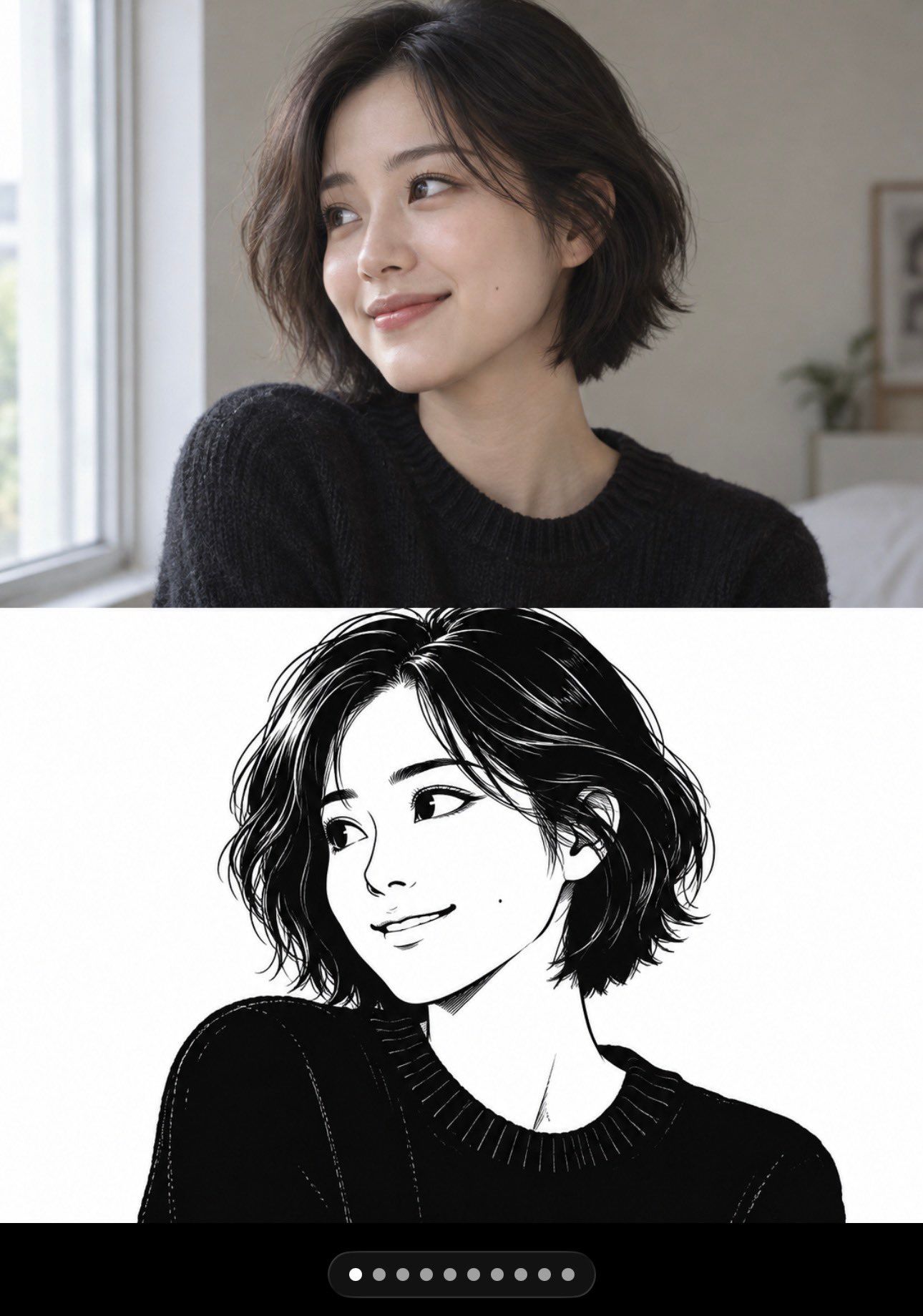
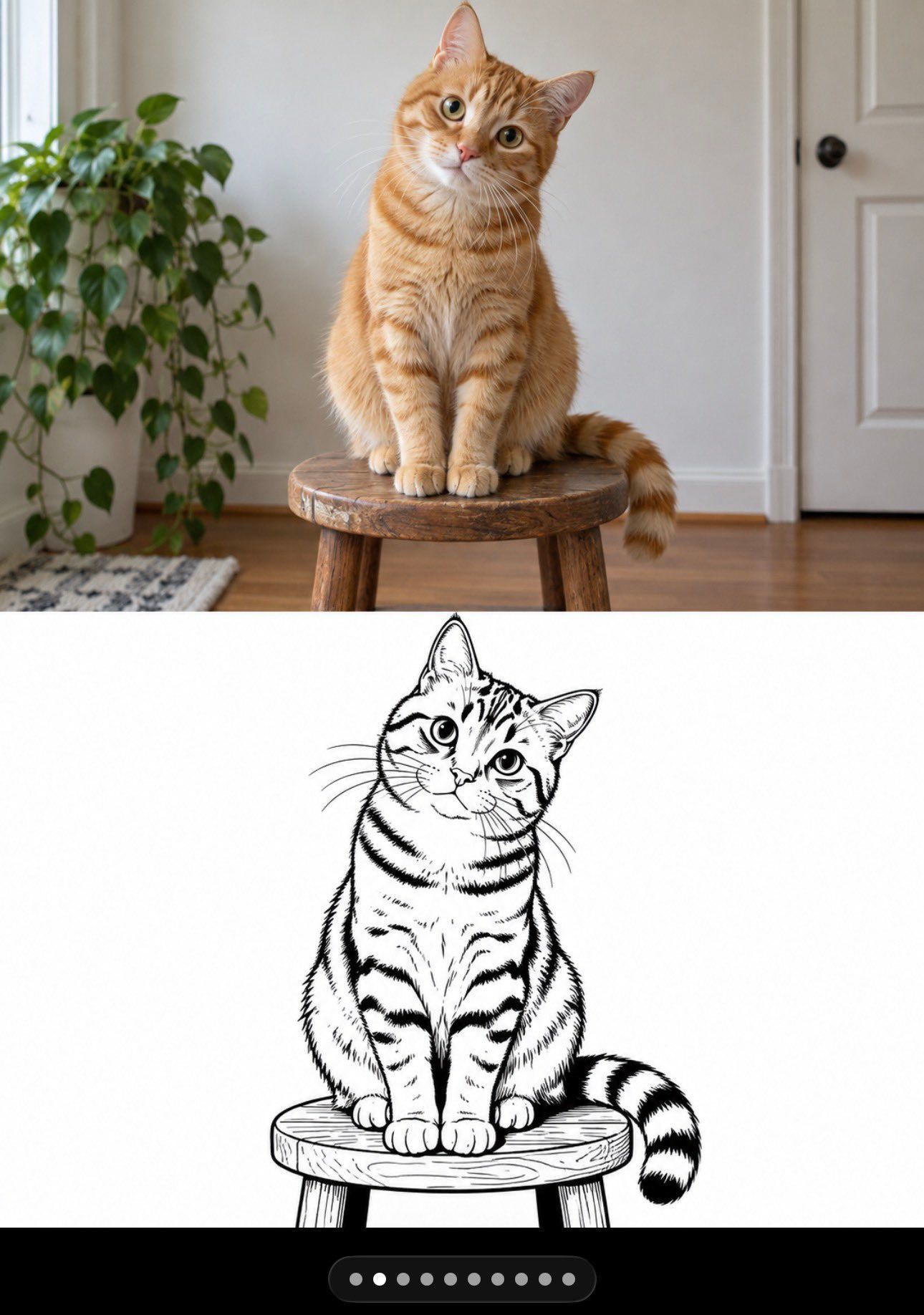
Create a vertical top-and-bottom diptych. Arrange the entire canvas vertically, with the upper and lower halves in an exact 1:1 height ratio, creating a clear and complete visual comparison.

Upper half:
Directly present the original image uploaded by the user, treating it as the sole reference for the subject. Focus on preserving the central person, pet, or animal. Prioritize the subject's facial features, hairstyle or fur characteristics, facial structure, expression, action, clothing, accessories, body silhouette, and overall character.
If the original image also contains architecture, interiors, street scenes, furniture, or landscapes, treat them only as subdued supporting backgrounds rather than primary subjects.
Keep the upper half photographic, with natural light and the original shooting atmosphere. It should be immediately recognizable as the original reference image itself. Do not turn the upper half into an illustration or stylized repainting.

Lower half:
Reconstruct the same person, pet, or animal from the upper half as a black-and-white ink drawing.
Emphasize the subject's most distinctive features. Do not mechanically copy every photographic detail; retain the most recognizable face shape, silhouette, pose, expression, relationships between actions, and sense of identity.
Use a 1970s two-dimensional animation aesthetic, emphasizing bold, rhythmical, high-contrast contours, sharp and clear line art, minimal yet varied line weights, and the graphic language of vintage animation cleanup drawings.
Use a high-key composition, adding a pure white backing around the subject or in selected areas to make the subject stand out clearly from the background.
Use only black and white. Do not add shadows, colors, grayscale, or intermediate tones. Avoid sketch-style light-and-shade modeling and colored accents.
Rather than depicting complex surroundings, use variations in line weight and density and simplified contours to create a vintage, graphic, animated black-and-white appearance.
For a human subject, emphasize expression, hairstyle, action, and clothing silhouette. For a pet or animal, emphasize ears, fur edges, eyes, body posture, and the rhythm of its movement.
The result should clearly communicate that the upper half is the real original image and the lower half translates the same subject into a 1970s black-and-white animated ink character.

Overall requirements:
The two halves must have a clear visual correspondence, making the lower half immediately recognizable as a stylized translation of the subject above.
Keep the image clean, restrained, and thoughtfully designed. Do not generate unnecessary text, logos, watermarks, or unrelated subjects. Do not let architecture or background elements compete for visual attention.
创作一张竖版上下双拼风格图像,整张画布严格纵向排版,上半部分与下半部分高度精准 1:1,形成清晰而完整的上下视觉对照关系。

上半部分:
直接呈现用户上传的原图,将原图视为唯一主体参考来源。重点保留原图中的人物、宠物、动物等核心主体,优先提取主体的脸部特征、发型或毛发特征、五官、神态、动作、服装、配饰、体型轮廓与整体气质。
如果原图中同时出现建筑、室内环境、街景、家具、风景等内容,这些都不作为主要表现对象,只作为弱化的辅助背景存在。
上半部分整体保持真实照片感、自然光感和原始拍摄氛围,让人一眼看出这是原始参考图本身,不要将上半部分也做成插画或风格化重绘。

下半部分:
将上半部分中的同一人物 / 同一宠物 / 同一动物主体重构为一张黑白墨线画。
突出主体最具辨识度的特征,不机械照搬照片细节,而是保留最有识别性的脸型、轮廓、姿态、表情、动作关系和身份气质。
整体采用二十世纪七十年代二维动画美学,强调粗犷而富有节奏感的高对比轮廓、锐利清晰的线稿、极简但有层级变化的线宽控制,以及老动画清稿式的图形语言。
画面采用高调构图,并在主体周围或局部区域加入纯白衬底,使主体从背景中更清晰地浮现出来。
只允许使用黑白两色,不得添加阴影、颜色、灰度或中间调,不要做素描式明暗塑造,也不要加入彩色点缀。
下半部分不追求复杂环境刻画,而是通过线条的轻重、疏密和轮廓的概括,形成具有年代感、图形感和动画感的黑白视觉效果。
如果原图主体是人物,则突出神态、发型、动作和服装轮廓;如果是宠物或动物,则突出耳朵、毛发边缘、眼神、体态和动作节奏。
整体效果要让人明显感受到:上方是真实原图,下方是同一主体被转译成七十年代黑白动画墨线形象。

整体要求:
上下两部分之间必须存在明确呼应关系,保证下半部分一眼就能识别出是上半部分主体的风格化转译。
画面干净、克制、有设计感,不要生成多余文字、Logo、水印,不要出现无关主体,不要让建筑或背景元素抢夺视觉中心。