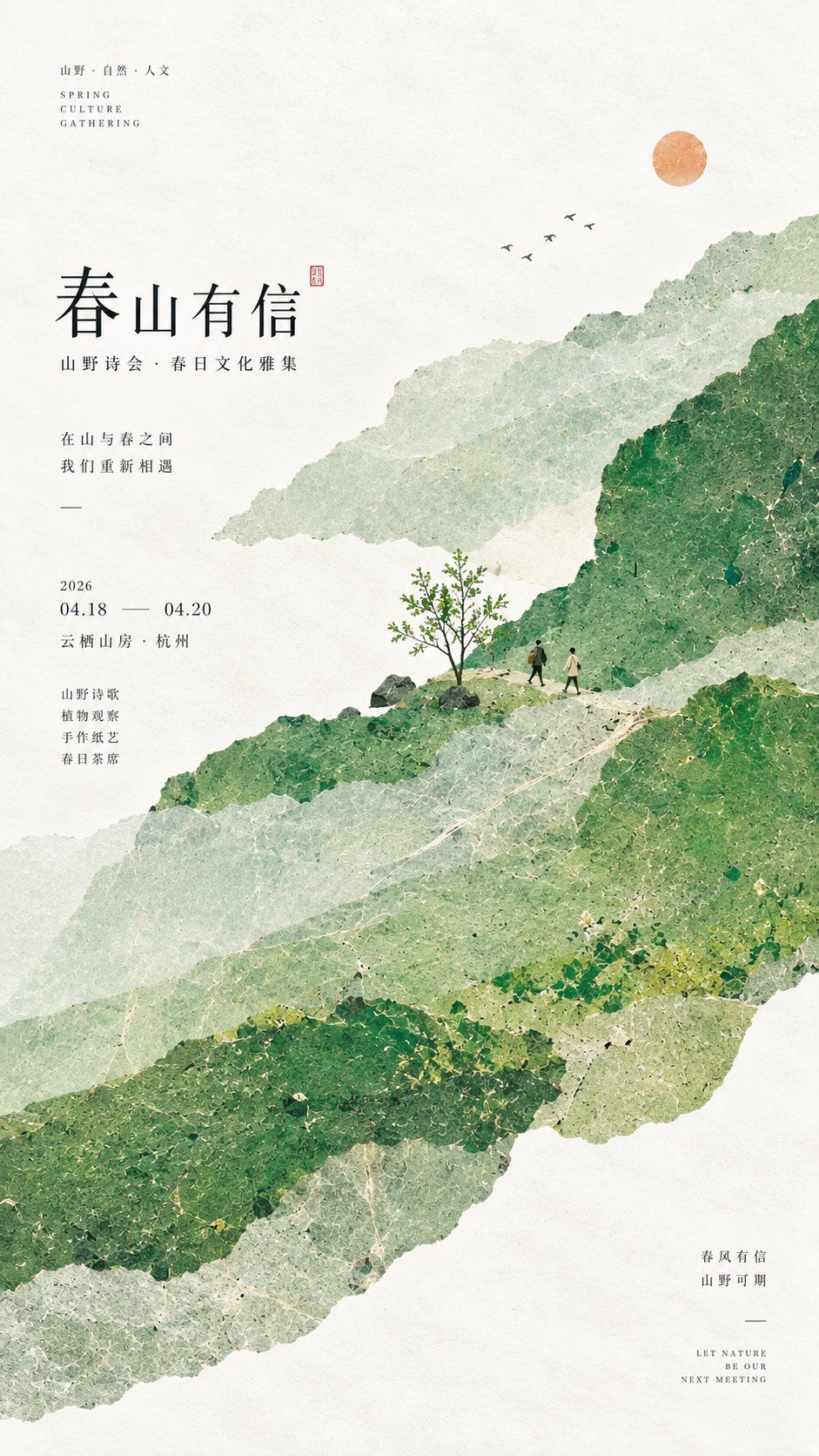
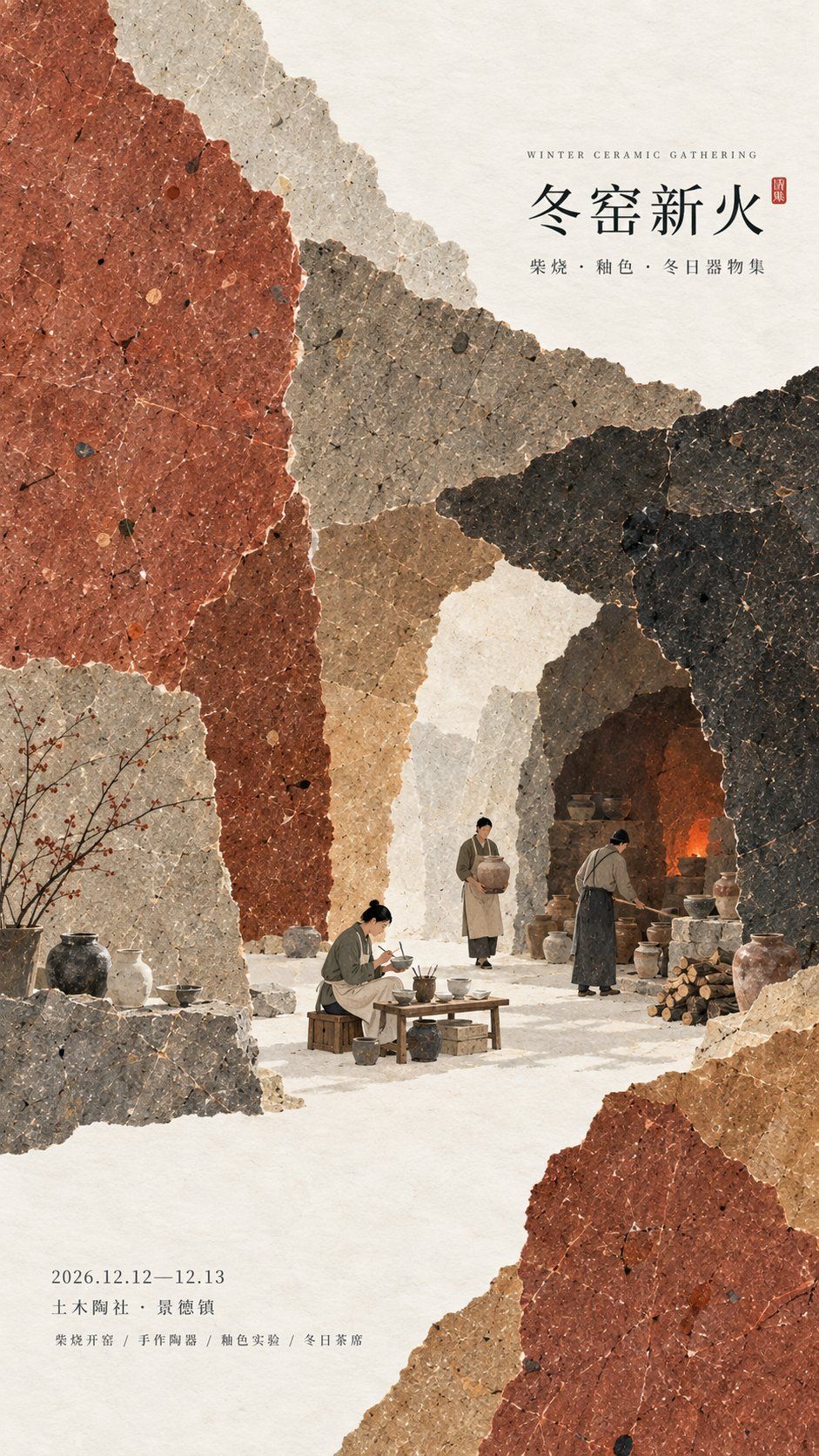
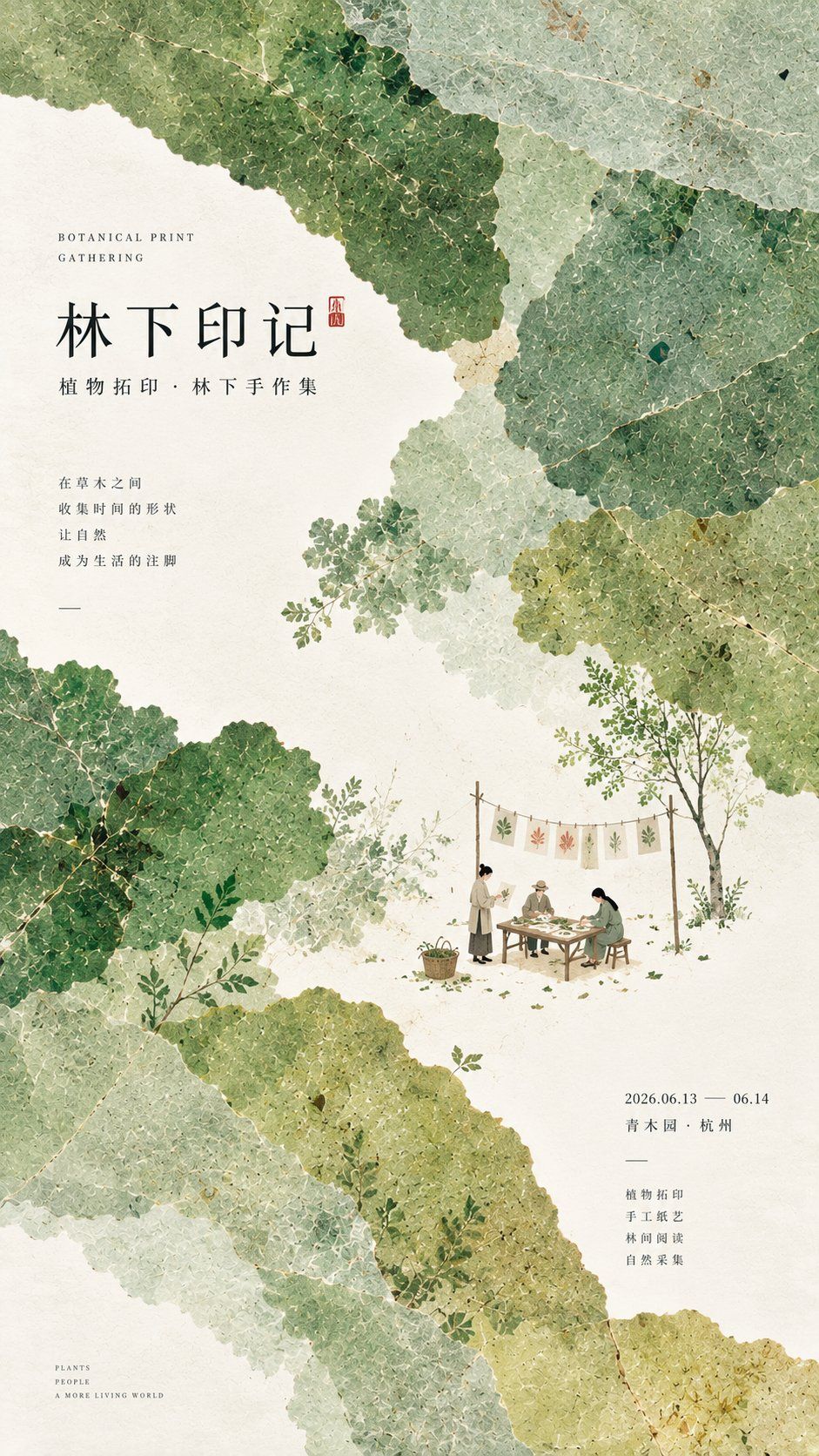
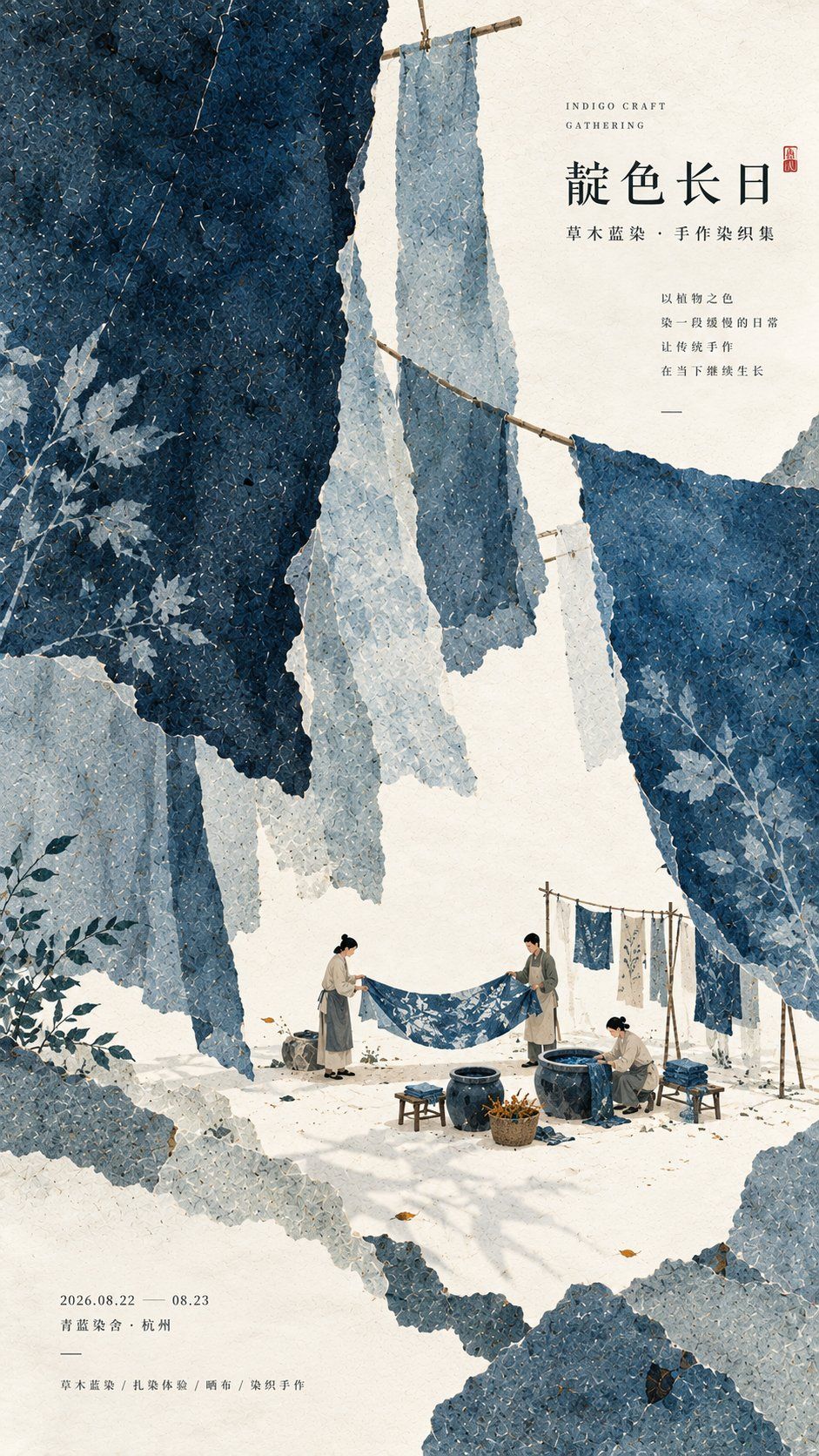
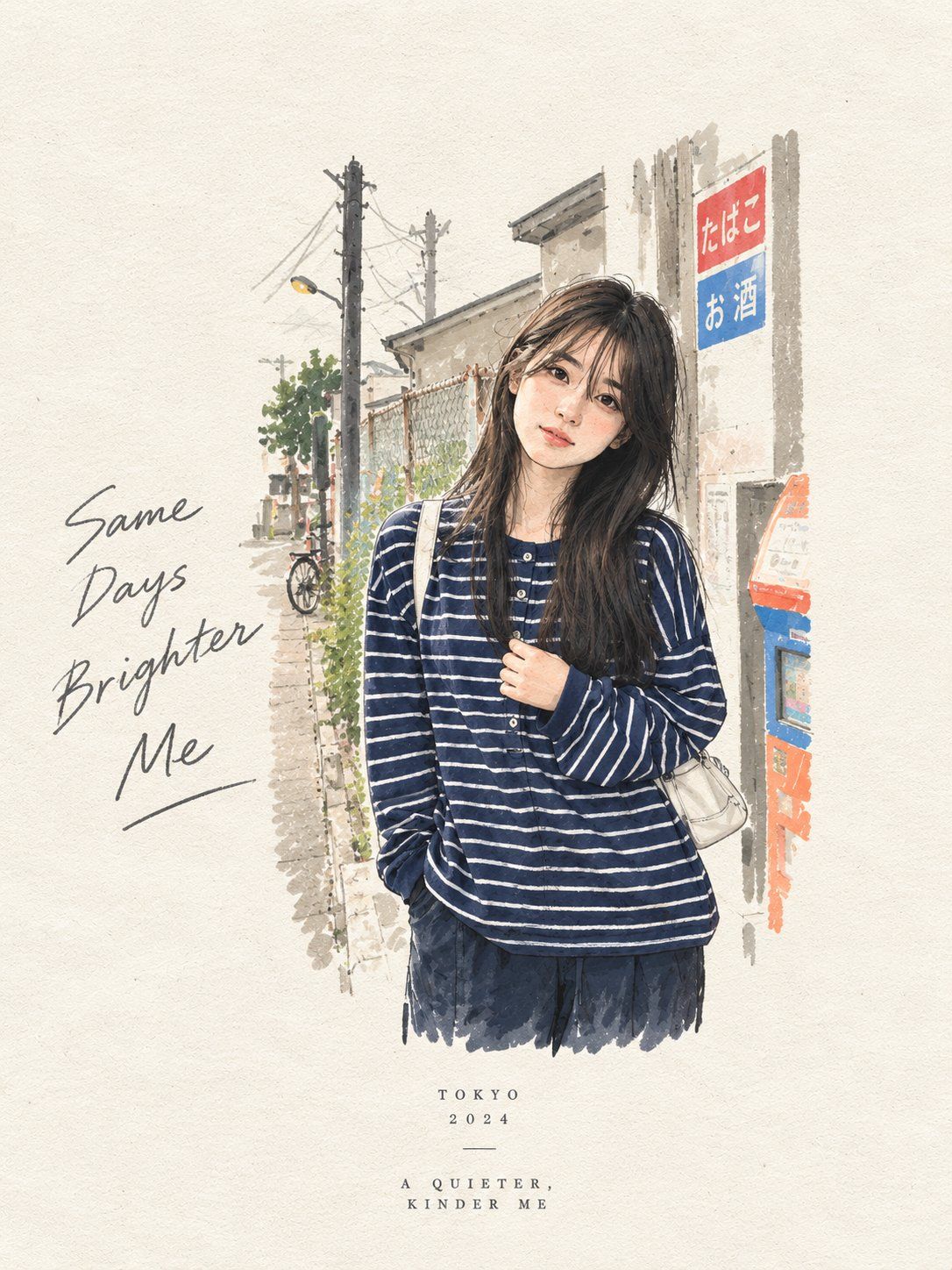
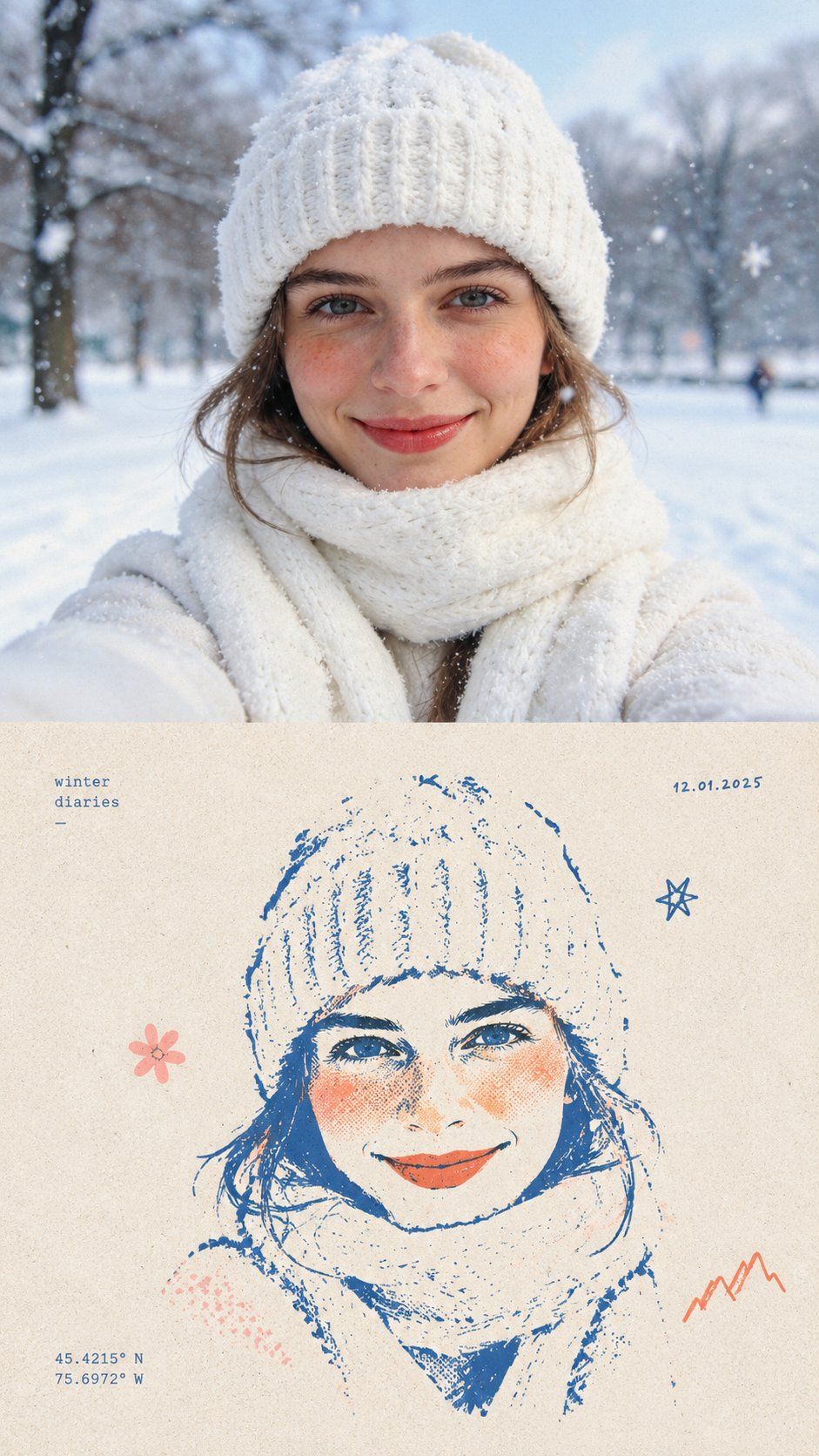
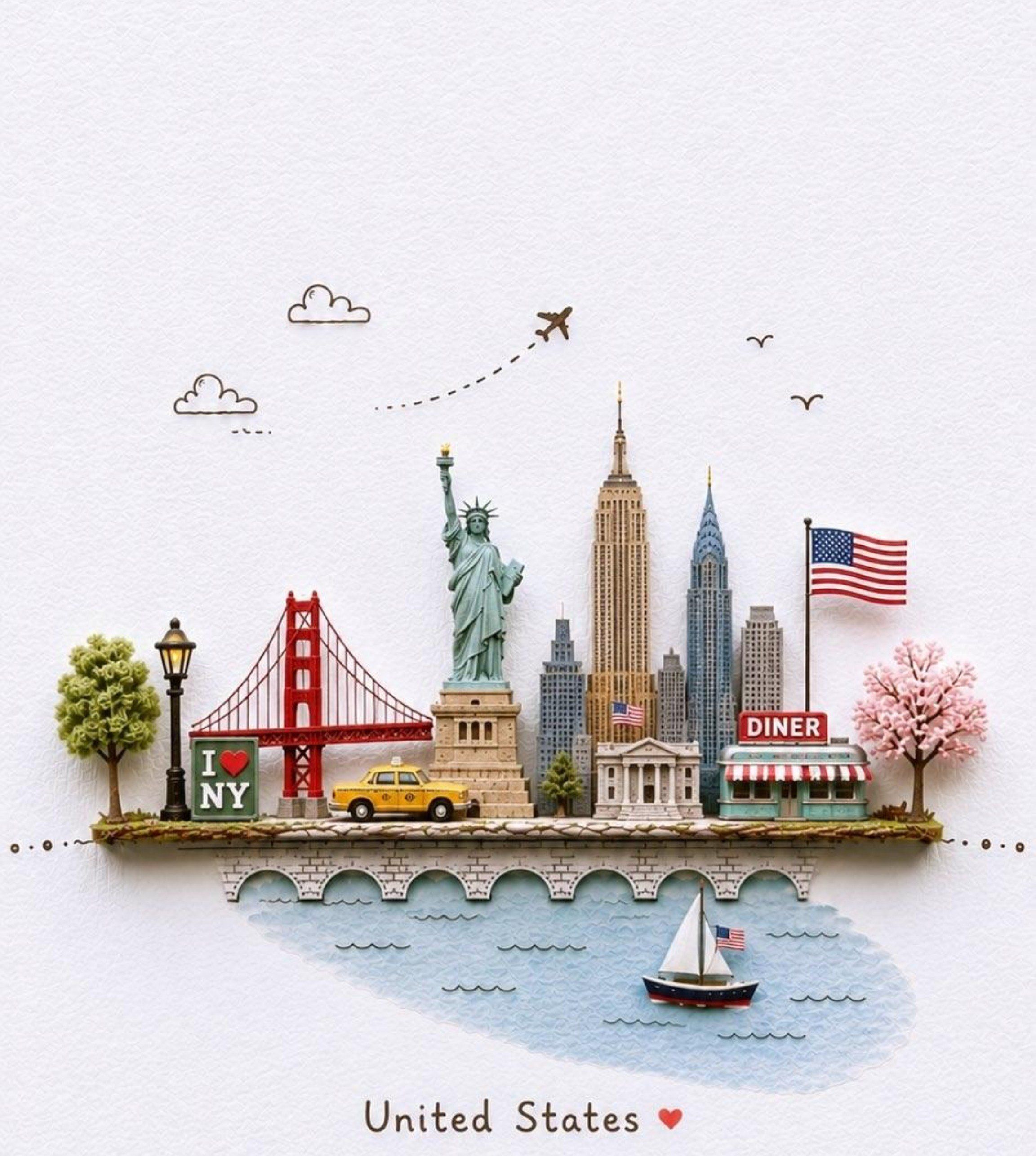
[Poster theme]
[Main title]
[Dominant color field]
[Miniature scene]
[Character action]
[Cultural elements]
[Event information]
[Aspect ratio]

Design a cultural event poster with a modern Eastern editorial aesthetic, using “large color fields + miniature scenes” as the core compositional approach and combining the material qualities of paper collage, watercolor, and natural pigments.

First establish a clear, visually substantial [Dominant color field]. Use large, irregular paper color blocks with natural edges to carry the composition. Based on the [Poster theme], create abstract space through layering, enclosure, displacement, interweaving, suspension, extension, or negative space. The blocks may suggest mountains, courtyards, workshops, dyed fabric, pottery kilns, or woodland, but should not become conventional realistic scenery.

The paper blocks must have a distinct, refined physical material quality: natural long and short fibers, handmade paper pulp particles, watercolor or mineral pigment deposits, subtle indentations, natural tonal variation, broad color variation, and irregular torn edges. Keep the rich textures clean, intact, matte, and airy overall. Avoid dirt, yellow stains, severe fading, random mottling, heavy noise, and cheap faux-antique effects.

The large color fields are the primary visual focus. From a distance, viewers should first perceive clear large shapes, color relationships, and spatial structure. The composition must remain recognizable when reduced to social media feed size. It must not depend on tiny text or complicated details to work.

Within the space formed by the large color blocks, add a very small [Miniature scene] with a complete narrative. People and props together occupy only about 2%–5% of the image. The people are genuinely performing [Character action], without looking at the camera or posing. Viewers should discover the miniature scene only on closer inspection, with the relationships between actions telling a small story.

Naturally introduce a few [Cultural elements] appropriate to the theme, such as pottery, handmade paper, dyed fabric, bamboo baskets, tea utensils, plants, a guqin, kites, wooden tables, or tools. Objects must actively participate in the scene. Do not pile them up for decoration or arrange them as a neat product display.

You may add a very small accent color, such as cinnabar red, warm orange, muted gold, or lamplight, generally limited to 1%–3% of the total area. The accent must relate to the theme, for example kiln fire, an imprint, an object, dye material, or a point of natural light, rather than arbitrary decoration.

Set [Main title] in a refined, restrained Chinese Song or Ming typeface, or a font with a contemporary publishing character. Keep the title small to medium in scale. Do not use enormous typography or let text overpower the large color fields. Use smaller type for supplementary English, dates, location, and event category, establishing a clear hierarchy with ample negative space.

Avoid rigidly centered layouts and PowerPoint-style grids. Favor asymmetrical composition, contrasts in scale, variations in density, generous negative space, offset color blocks, and overlapping layers. Text should enter the image naturally like editorial information from a cultural institution, rather than covering the visual subject.

The overall reading order should be:

Large paper color fields and their material relationships → miniature human scenes and cultural activities → main title → small event information.

The final result should be a modern Eastern cultural poster that looks simple and boldly shaped from afar, yet refined, tactile, and rich in narrative up close. Combine paper collage, watercolor texture, editorial design, miniature storytelling, and cultural event visuals. Be refined without becoming overly elaborate.

Avoid: a book-cover look, oversized titles, traditional ink painting, generic Chinese-style illustration, realistic photographic backgrounds, PowerPoint-style layouts, commercial advertising aesthetics, cluttered elements, meaningless English placeholder words, dirty aged paper, heavy noise, plastic textures, 3D CGI, glass materials, neon colors, logos, watermarks, numbering, and starburst decorations.
【海报主题】
【主标题】
【主色域】
【微场景】
【人物动作】
【文化元素】
【活动信息】
【画幅比例】

设计一张具有现代东方编辑美学的文化活动海报,以「大色域 + 微场景」作为核心构成方法,并融合纸本拼贴、水彩与天然颜料的材料质感。

画面首先建立一个清晰而有视觉重量的【主色域】。使用大面积、不规则、具有自然边缘的纸本色块承担主要构图,根据【海报主题】让色块通过层叠、围合、错位、穿插、悬挂、延伸或负空间关系形成抽象空间。色块可以暗示山势、庭院、工坊、染布、陶窑、林地等,但不要直接画成普通写实场景。

纸本色块必须具有明显而高级的真实材料感:天然长短纤维、手工纸浆颗粒、水彩或矿物颜料沉积、轻微压痕、自然浓淡、大尺度色差与不规则撕纸边缘。材质丰富但整体保持干净、完整、哑光、有呼吸感。避免脏污、黄斑、严重褪色、随机斑驳、强噪点和廉价仿古效果。

大色域是画面的第一视觉。远看时应首先看到清楚的大形、色彩关系和空间结构,即使缩小成社交媒体信息流尺寸仍然具有明显识别度。不要依赖细小文字或复杂细节才能成立。

在大片色块形成的空间中加入一个尺度很小但叙事完整的【微场景】。人物与道具整体只占画面约 2%–5%,人物正在真实地执行【人物动作】,不直视镜头、不摆拍。微场景需要让观众靠近以后才发现,并通过动作关系讲清一个小故事。

根据主题自然加入少量【文化元素】,例如陶器、手工纸、染布、竹篮、茶具、植物、古琴、纸鸢、木桌、工具等。器物应真正参与场景,不要为了装饰而堆砌,也不要做成整齐的商品陈列。

画面可以设置一个面积极小的视觉点睛色,例如朱砂红、暖橙、枯金或灯火色,通常控制在整体面积的 1%–3%。点睛色应与主题发生关系,例如窑火、印记、器物、染材或自然光点,而不是随意添加装饰。

主标题【主标题】使用精致、克制的中文宋体、明朝体或具有现代出版气质的字体。标题字号保持中小尺度,不使用巨大 Typography,不让文字压过大色域。辅助英文、日期、地点和活动类型使用更小字号,形成清楚的信息层级,并保留充分留白。

排版避免规则居中和 PPT 式网格。优先使用不对称构图、大小反差、疏密变化、大面积留白、色块错位和前后遮挡,让文字像文化机构的编辑信息一样自然进入画面,而不是覆盖在视觉主体表面。

整体阅读顺序应为:

大片纸本色域与材质关系 → 微型人物场景与文化行为 → 主标题 → 小型活动信息。

最终呈现一种“远看简洁有大形,近看精致有材质、有故事”的现代东方文化海报。整体应兼具纸本拼贴、水彩肌理、编辑设计、微型叙事和文化活动视觉的特征,精致但不过度繁复。

避免:书籍封面既视感、巨大标题、传统水墨画、普通国风插画、写实摄影背景、PPT式排版、商业广告感、元素堆砌、无意义英文占位词、脏旧纸张、强噪点、塑料质感、3D CGI、玻璃材质、霓虹色、Logo、水印、编号和星芒装饰。