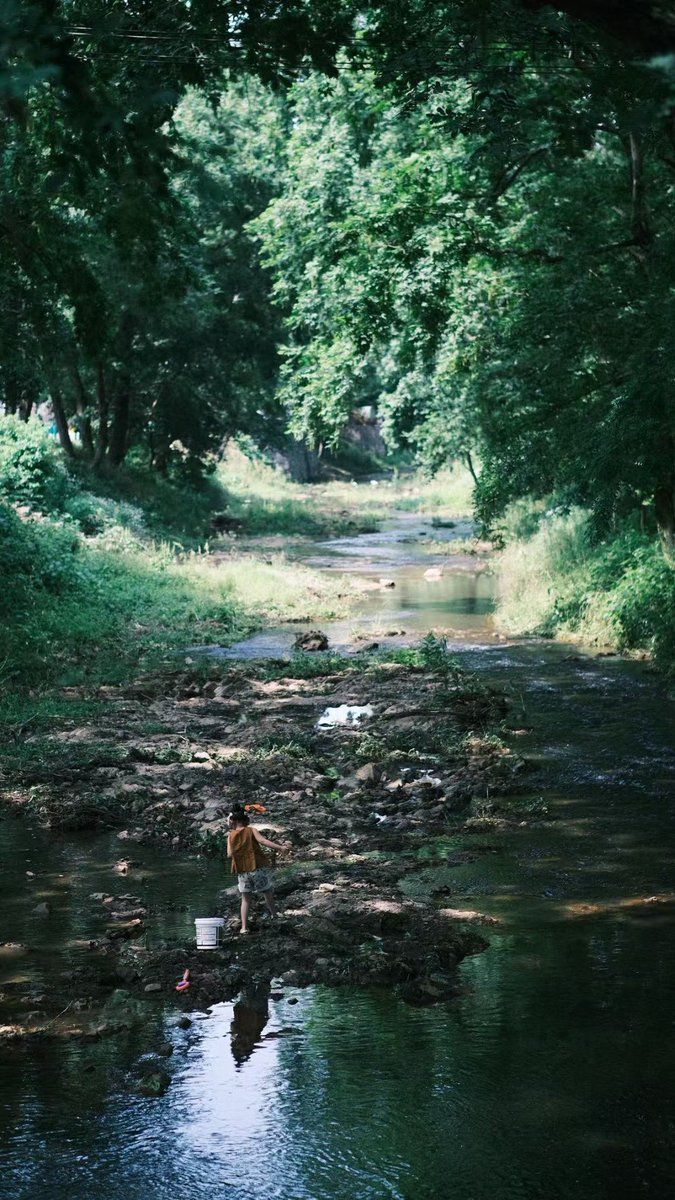
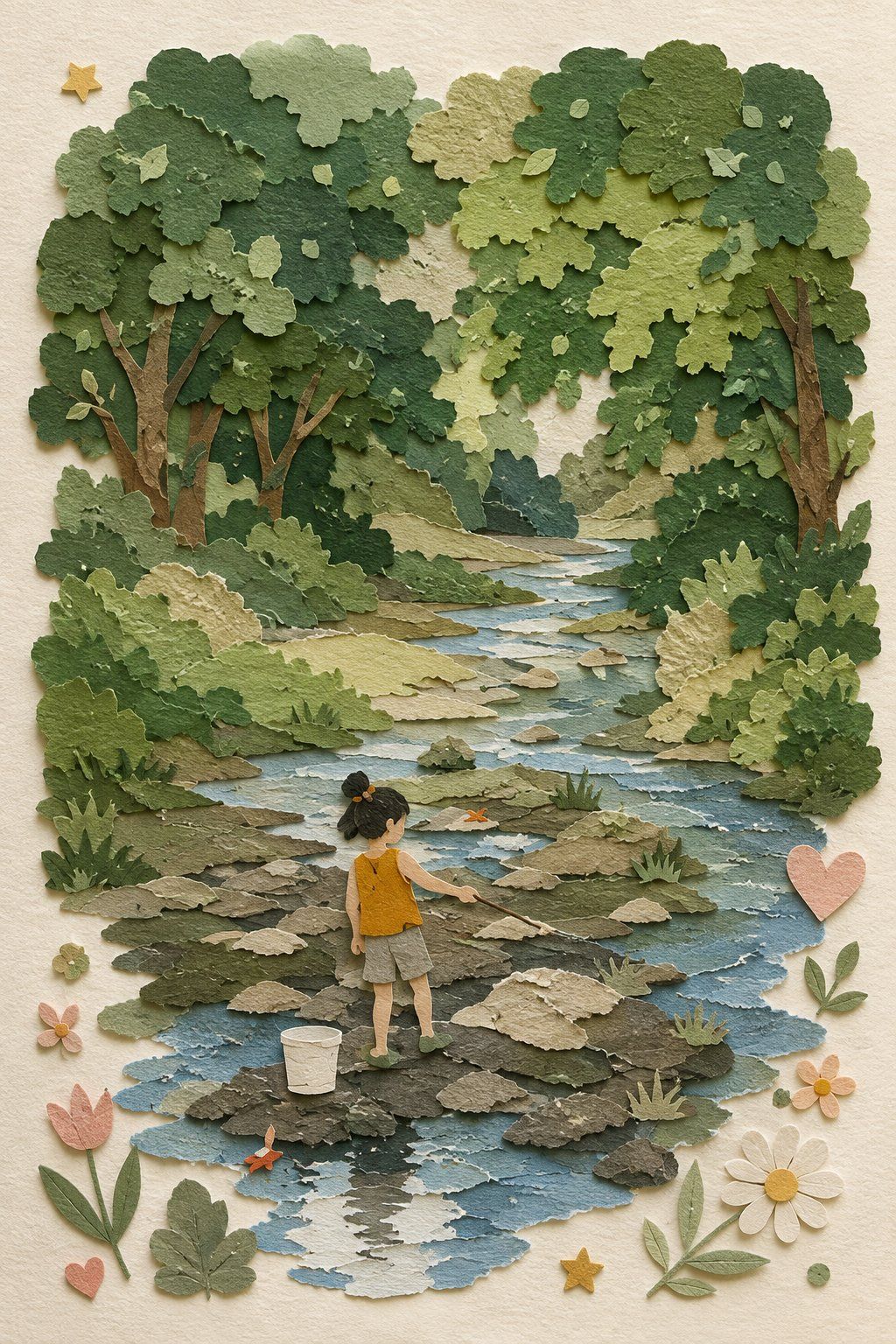
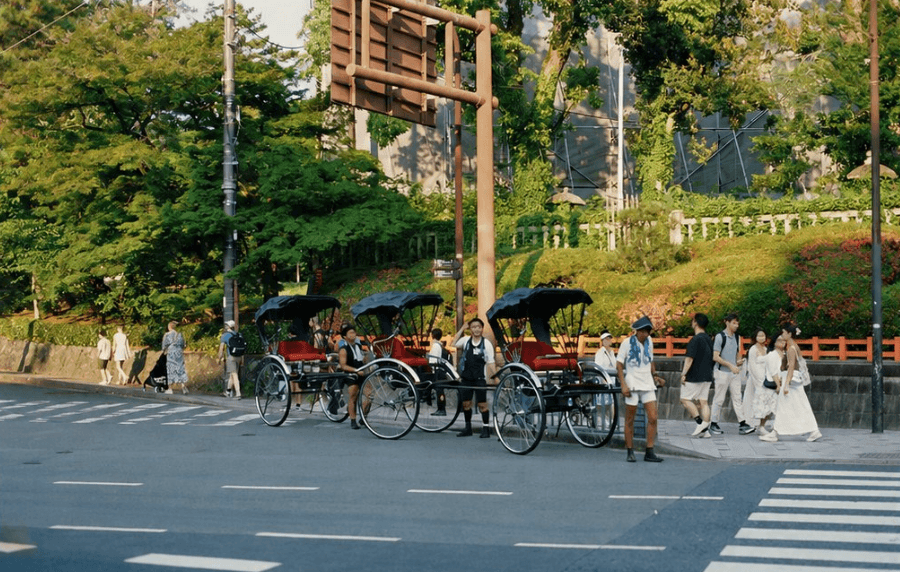
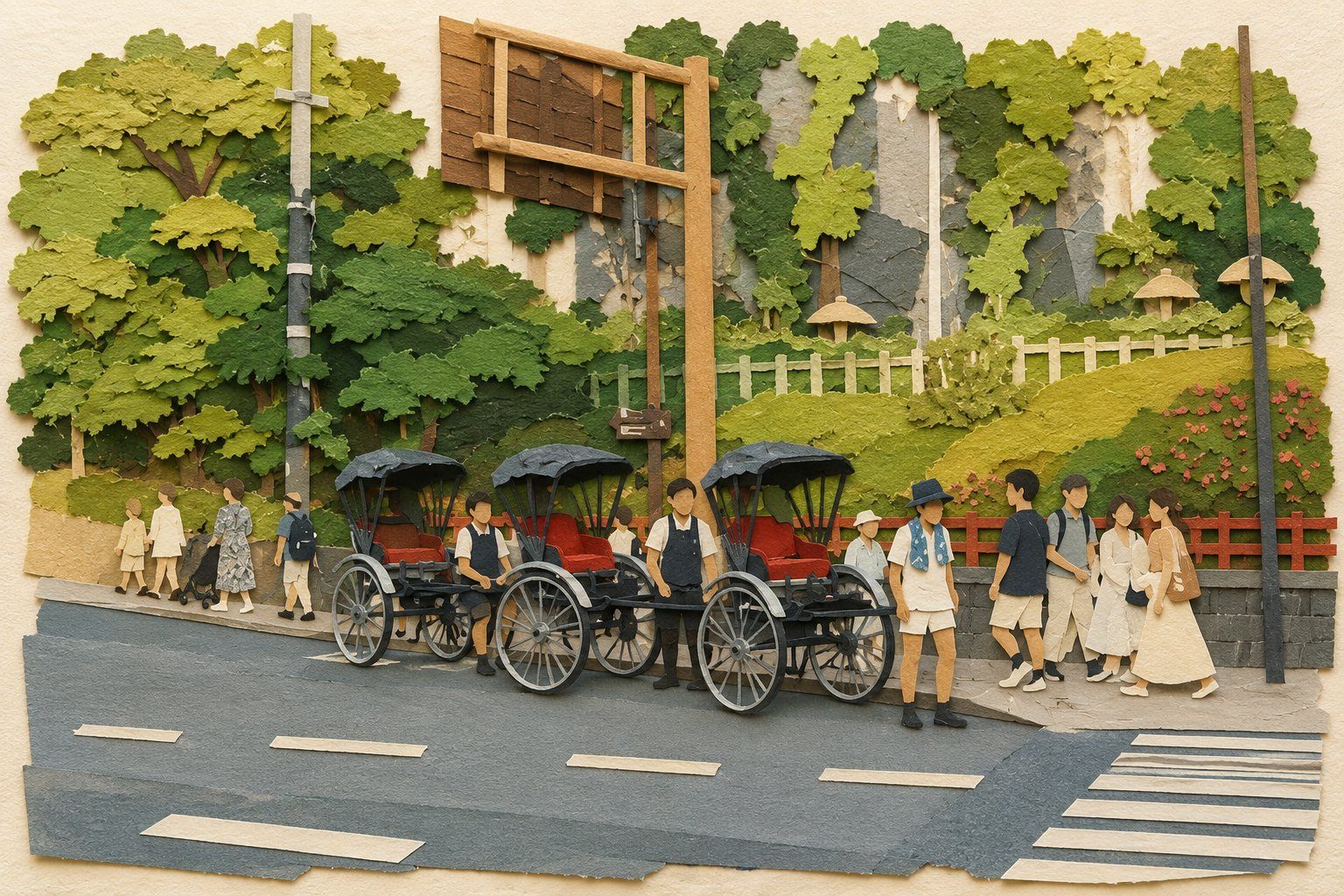
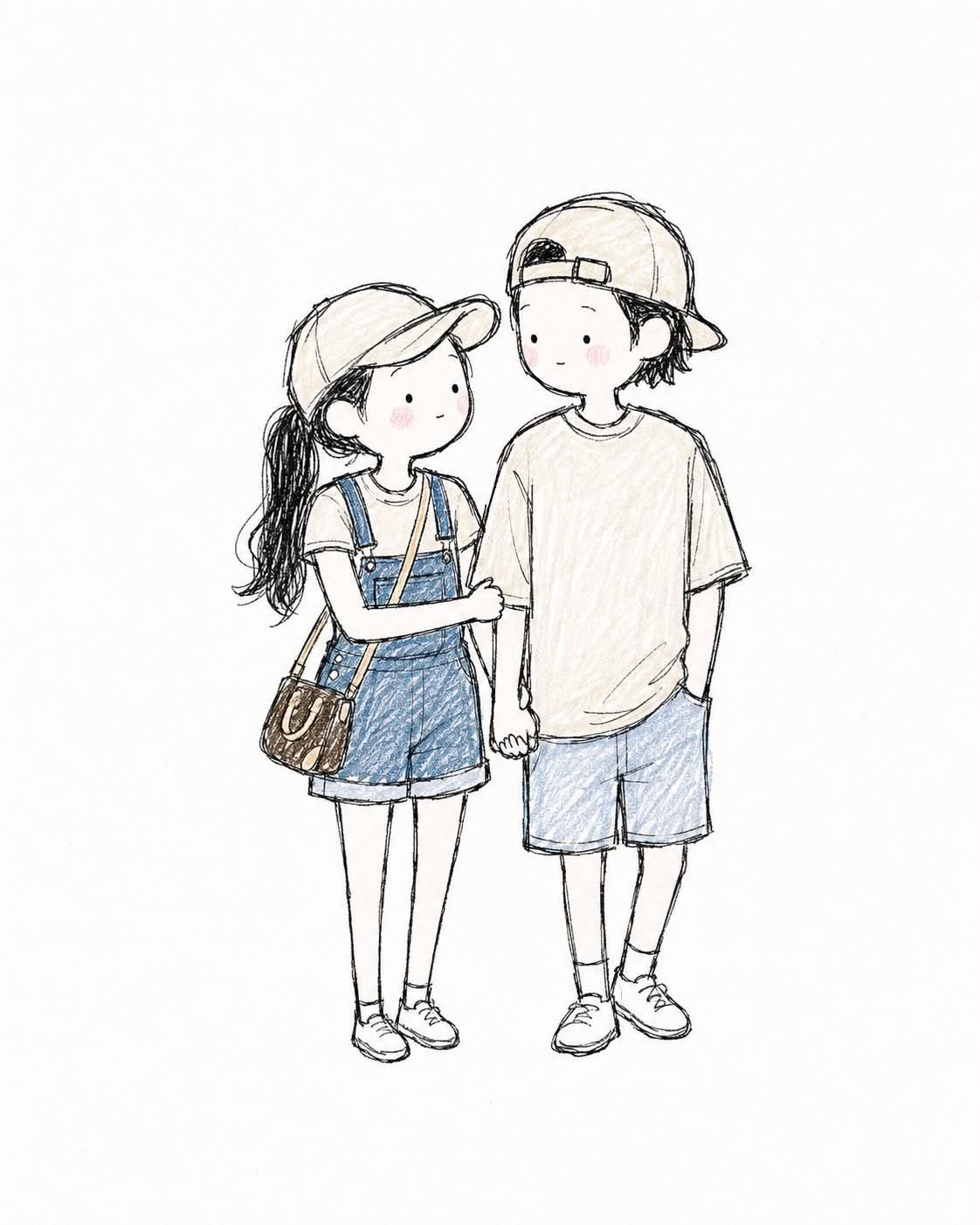
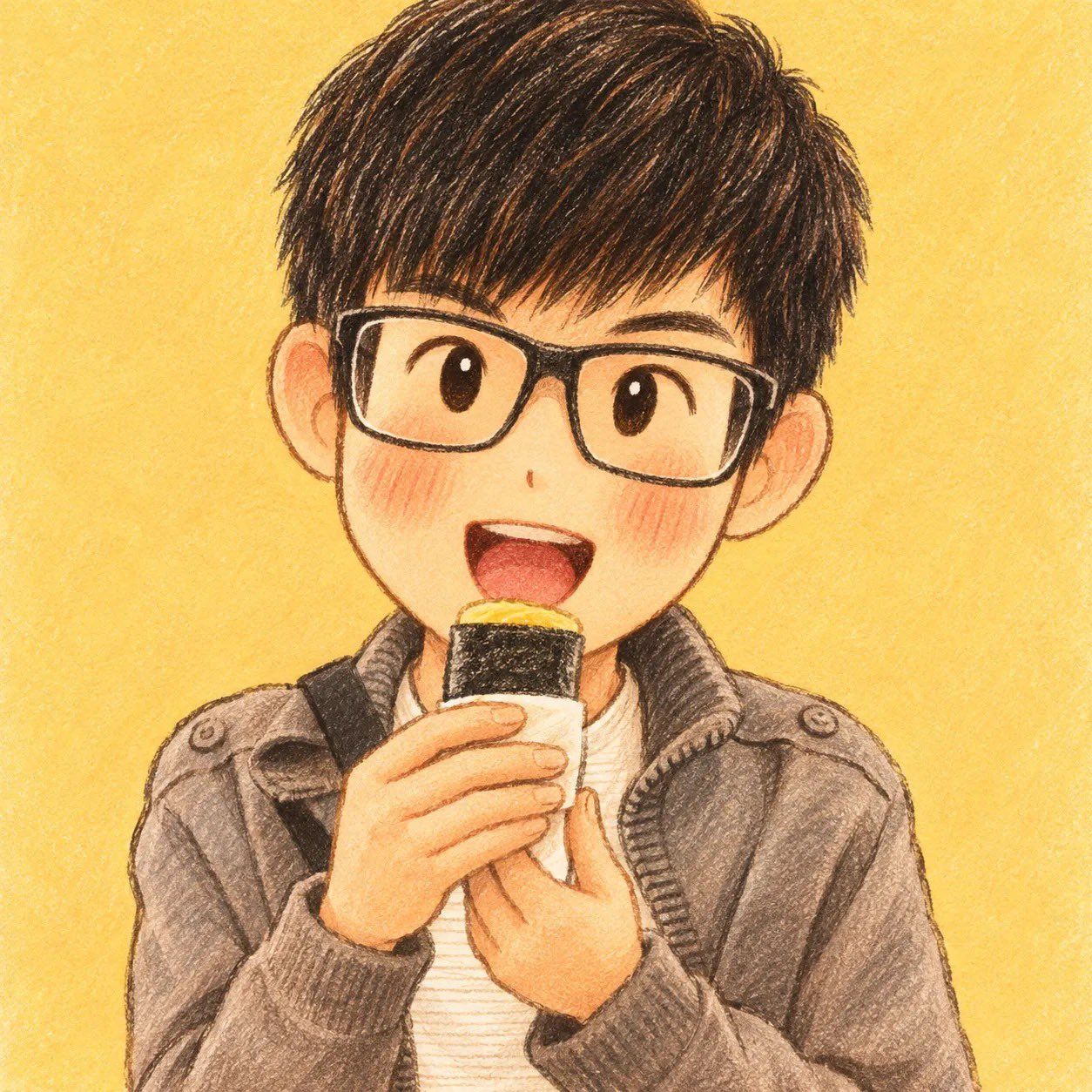
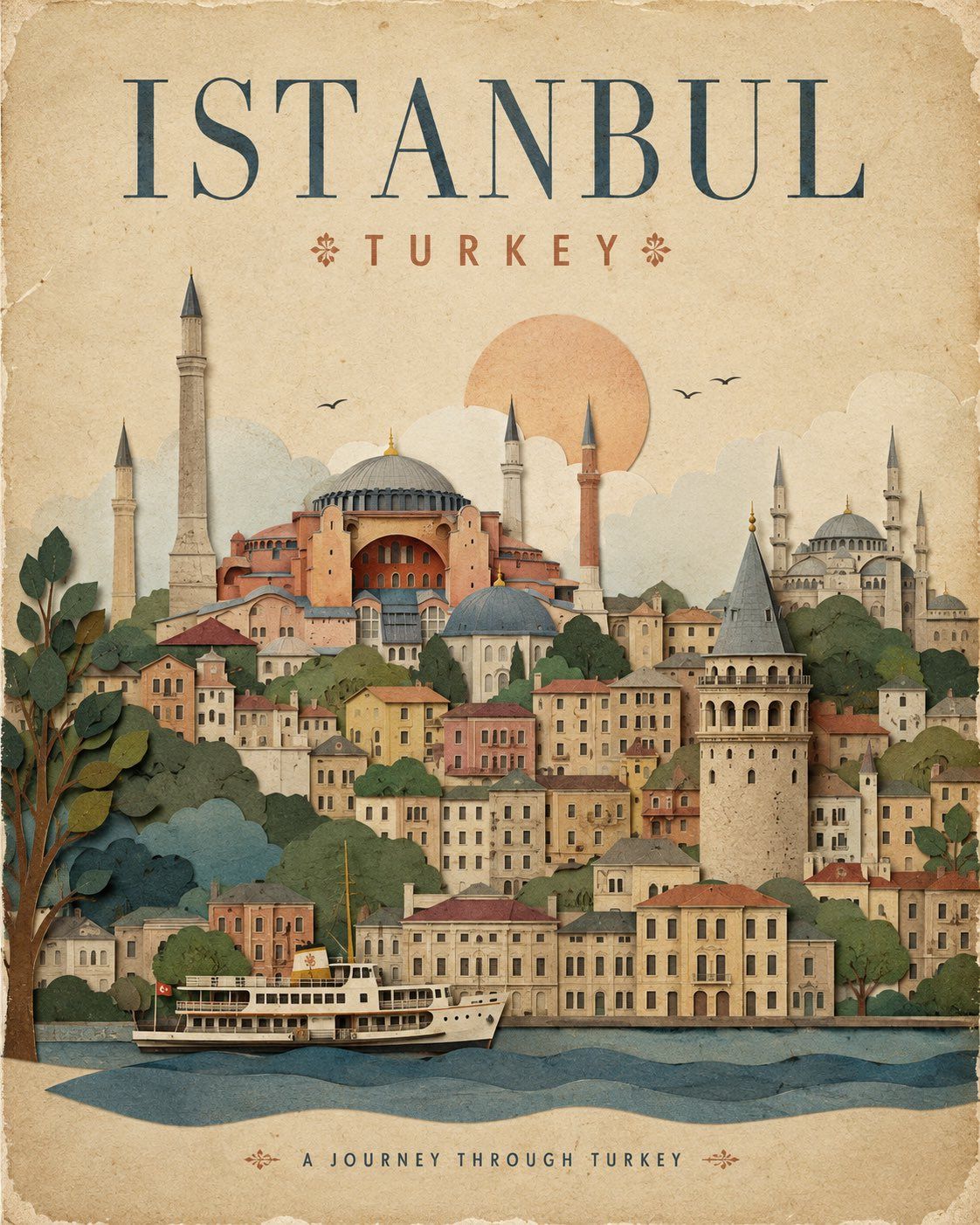
Reinterpret the **provided reference image, whatever it may be,** as a **handmade layered paper collage illustration**. The overall result should have a warm, cute, nostalgic, childlike modern storybook papercraft style.

## Core Transformation Principles

First understand the genuinely important visual information in the reference image and preserve:

- The identities and number of subjects
- The poses, actions, and facing directions of people or animals
- The relationships between people, and between people and objects
- Key clothing, hairstyles, accessories, and distinctive characteristics
- Core objects
- The basic composition, spatial direction, and meaning of the scene

**Do not copy the photograph pixel by pixel, and do not simply cover the photograph with a paper texture.**

Redesign the entire real scene as a **paper illustration made entirely from handmade paper pieces of different colors, thicknesses, and textures that have been cut, torn, joined, and layered one over another**.

No real photographic elements may remain in the final image.

---

## People and Subjects

If the reference image contains people, transform them completely into **paper-collage figures**.

The figures should not be photographs cut out and pasted onto paper, nor realistic 3D dolls. They should be assembled from multiple independent pieces of paper:

Hair, hats, faces, necks, tops, sleeves, arms, hands, trousers, legs, socks, shoes, and so on should each be cut from and layered with paper pieces of different shapes and colors.

Preserve the most important characteristics of the people in the reference:

- Body proportions
- Action and pose
- Direction of the limbs
- Direction of the head
- Simplified expressions
- Hairstyle and hats
- Clothing silhouettes
- Main clothing colors
- Shoes and important accessories

But summarize them with moderate storybook stylization and cuteness.

**Do not generate realistic skin.**

Represent faces with warm beige, light brown, or softly skin-toned paper. Suggest the nose, mouth, ears, and eyes only through a very small number of paper shapes, shallow indentations, or simple cut-paper structures.

Keep facial features extremely simple; do not pursue photographic facial detail.

Clothing must also look unmistakably like paper rather than real fabric. Use differing paper textures—such as embossed paper, coarse-fiber paper, fine-striped paper, and crepe paper—to suggest the materials of knitwear, trousers, socks, and shoes.

Keep each figure as a **flat, shallow bas-relief papercraft structure**.

**shallow bas-relief, not sculptural, not a figurine**

Do not make the figures into rounded, fully three-dimensional dolls.

---

## Paper Material

Every element must display a clearly visible, authentic handmade-paper texture:

- Rough paper fibers
- Handmade-paper grain
- Slight wrinkles
- Embossing
- Uneven surfaces
- Fuzzy paper edges
- Hand-cut edges
- A small amount of naturally torn edging
- Subtle paper thickness

The paper must not look overly smooth or digital.

Do not make every edge a perfect vector curve.

Retain slight irregularities, crookedness, and handmade errors so viewers can clearly feel that the elements were **made by hand-cutting and tearing paper**.

---

## Layering and Dimensional Effect

Use a **shallow bas-relief layered papercraft structure** throughout the work.

Create visibly real height differences between the paper layers:

Background paper
→ Large environmental paper pieces
→ Ground and buildings
→ Plants or decorations
→ Figure bodies
→ Clothing
→ Hands and feet
→ Local details such as hats, hair, and shoes

Create very soft, natural contact shadows between the paper pieces.

Place most shadows directly beneath the paper edges so it is clear that the paper has been **attached one layer at a time**.

Keep the dimensionality restrained.

The image should look like a refined handmade collage placed on a tabletop and photographed from the front, not like a fully three-dimensional miniature model.

---

## Scene Simplification

Do not faithfully reproduce every environmental detail in the reference photograph.

Compress the information in the real scene substantially.

Transform complex buildings, forests, streets, interiors, furniture, rocks, water, vehicles, and other elements into **a small number of large paper shapes**.

Remove:

- Cluttered backgrounds
- Repeated objects
- Tiny textures
- Photographic noise
- Complex reflections
- Intricate architectural structures
- Unimportant distant scenery
- Irrelevant clutter

Keep only the environmental elements necessary to help viewers understand the original scene.

For example:

Trees can be simplified into green paper canopies plus simple trunks;

Roads can be simplified into one or two horizontal strips of gray or blue-gray paper;

Walls can become large areas of off-white handmade paper;

Water can become several layers of light-blue torn paper;

Mountains can become layered silhouettes of irregular paper pieces;

Buildings can retain only their most recognizable geometric structures.

---

## Background and Composition

Use **clean, warm white or cream-white handmade paper** as the base background for the entire work.

Subtle natural paper fibers and a slightly uneven texture must remain visible in the background.

Preserve the approximate compositional relationships of the reference image, but allow a moderate increase in negative space so the result feels more like a standalone illustration page from a children's picture book.

The subject must remain the visual center.

Do not let newly added decorations alter the story meaning of the original photograph.

---

## Decorative Elements

Without damaging the original scene, you may add a small number of cute handmade cut-paper decorations in empty areas:

- Small flowers
- Daisies
- Tulips
- Small stars
- Clouds
- Hearts
- Small dots
- Simple leaves

These elements must also be made from separate paper pieces.

Petals, flower centers, and leaves can be formed by layering small paper pieces in different colors.

Decorative elements should be **scattered, restrained, and not perfectly symmetrical**, like small embellishments casually added while handcrafting a picture book.

Do not densely fill the background.

Do not let flowers, hearts, or stars overpower the subject.

If the original scene is already complex, reduce the decorative elements even further.

---

## Color

Use an overall **low-saturation, warm, vintage storybook palette**.

Prioritize:

Off-white
Cream white
Oatmeal
Warm gray
Blue-gray
Sage green
Olive green
Brick red
Terracotta red
Soft brown
Mustard yellow
Dusty pink
Pale orange

Avoid highly saturated fluorescent colors.

Keep the colors soft and harmonious, while inheriting as much as possible the most distinctive color relationships of the subject in the reference image.

---

## Light and Shadow

Use soft, natural, diffused light.

The lighting should resemble the gentle natural light beside an overcast window or in a professional studio photographing papercraft.

Create slight, consistently directed soft shadows along the edges of the paper pieces.

The shadows should help convey:

**Paper thickness, paper-layer hierarchy, and handmade collage relationships.**

Do not use intense cinematic lighting.

Do not use dramatic backlighting.

Do not produce skin highlights associated with realistic portrait photography.

---

## Final Visual Effect

At first glance, viewers should be able to recognize the subject, action, and story from the reference image, but at second glance it should be obvious that:

**The entire image was made by cutting, tearing, and layering real handmade paper.**

Overall feeling:

**handmade layered paper collage, dimensional cut-paper illustration, torn-edge paper craft, shallow bas-relief paper art, handcrafted children's picture-book aesthetic, tactile fibrous paper texture, layered paper pieces, subtle paper thickness, soft contact shadows, imperfect hand-cut edges, warm nostalgic colors, whimsical and playful, charming handmade imperfections**

Emphasize:

**This is “a world assembled from paper pieces,” not “the real world turned into a paper material.”**

## Must Avoid

No photorealism
Do not retain realistic photographic skin
No real fabric
No realistic individual hair strands
No realistic road or wall textures
Do not directly paste cut-out photographs of real people into the image
Do not merely add a paper filter
No plastic texture
No clay style
No felt style
No wool-felt style
No ceramic texture
No modeling clay
No fully three-dimensional dolls
No rounded 3D cartoon characters
No miniature model / miniature diorama style
No excessively strong depth of field
No photographically realistic materials
No perfect vector edges
No complex backgrounds
No excessive decoration
No dense flowers
No text
No logos
No watermarks

**Most important: maintain a two-dimensional collage with a shallow bas-relief effect created by slight paper thickness. Every person, environment, and decoration must clearly consist of independent handmade paper pieces, with visible paper fibers, irregular cut or torn edges, and soft layered shadows.**
将输入的**任意参考图像**重新诠释为一幅**手工制作的层叠纸质拼贴插画(handmade layered paper collage)**。整体呈现温暖、可爱、怀旧、富有童趣的现代绘本纸艺风格。

## 核心转换原则

首先理解参考图中真正重要的视觉信息,并保留:

- 主体身份与主体数量
- 人物或动物的姿态、动作与朝向
- 人物之间、人物与物体之间的关系
- 关键服装、发型、配饰与具有辨识度的特征
- 核心物体
- 基本构图、空间方向与场景含义

**不要逐像素复制照片,也不要简单给照片覆盖纸张纹理。**

将整个真实场景重新设计成一幅**完全由不同颜色、厚度和纹理的手工纸片剪裁、撕裂、拼接和层层叠放而成的纸质插画**。

最终画面中不得残留任何真实摄影元素。

---

## 人物与主体

如果参考图中有人物,将人物完整转换成**纸片拼贴人物**。

人物不是照片剪下来贴在纸面上,也不是写实的 3D 玩偶,而是由多个独立纸片组合而成:

头发、帽子、脸部、脖子、上衣、袖子、手臂、手掌、裤子、腿、袜子、鞋子等,都使用不同形状和颜色的纸片分别剪裁并叠加。

保留参考人物最重要的:

- 身体比例
- 动作姿势
- 四肢方向
- 头部朝向
- 简化后的表情
- 发型与帽子
- 服装轮廓
- 服装主要颜色
- 鞋子与重要配饰

但进行适度绘本化和可爱化概括。

**不要生成真实皮肤。**

脸部使用暖米色、浅棕色或柔和肤色纸张表现,仅通过极少量纸片形状、浅压痕或简单剪纸结构暗示鼻子、嘴巴、耳朵和眼睛。

人物五官保持非常简洁,不追求照片级面部细节。

衣服同样必须明显表现为纸张,而不是真实布料。可以利用压纹纸、粗纤维纸、细条纹纸、皱纹纸等不同纸张纹理暗示针织衫、裤子、袜子和鞋子的材质。

人物整体保持**扁平的浅浮雕纸艺结构**。

**shallow bas-relief, not sculptural, not a figurine**

不要把人物制作成圆润、完整立体的玩偶。

---

## 纸张材质

所有元素必须具有清晰可见的真实手工纸张质感:

- 粗糙纸纤维
- 手工纸颗粒
- 轻微褶皱
- 压纹
- 不均匀表面
- 毛茸茸的纸边
- 手工剪裁边缘
- 少量自然撕裂边缘
- 微小纸张厚度

纸张不能过于光滑或数字化。

边缘不要全部使用完美的矢量曲线。

保留轻微的不规则、歪斜和手工误差,让观者能够明显感觉到这些元素是**人工剪纸和撕纸制作出来的**。

---

## 层叠与立体效果

整个作品采用**浅浮雕式层叠纸艺结构**。

不同纸片之间具有真实可见的高度差:

背景纸
→ 大型环境纸片
→ 地面与建筑
→ 植物或装饰
→ 人物身体
→ 衣服
→ 手脚
→ 帽子、头发、鞋子等局部细节

纸片之间产生非常柔和、自然的接触阴影。

阴影主要出现在纸片边缘下方,让人能够看到纸张是**一层一层贴上去的**。

立体程度保持克制。

画面应该像一幅放置在桌面上、从正面拍摄的精致手工拼贴作品,而不是一个完整的立体微缩模型。

---

## 场景简化

不要忠实复制参考照片中的全部环境细节。

对真实场景进行明显的信息压缩。

复杂建筑、树林、街道、室内环境、家具、石头、水面、车辆等,都转换成**少量大块纸片形状**。

删除:

- 杂乱背景
- 重复物体
- 微小纹理
- 摄影噪点
- 复杂反射
- 精细建筑结构
- 不重要的远景
- 无关杂物

只保留能够帮助观者理解原始场景的必要环境元素。

例如:

树木可以简化成绿色纸片树冠 + 简单树干;

道路可以简化成一两层灰色或灰蓝色横向纸条;

墙壁可以变成大面积米白色手工纸;

水面可以变成几层浅蓝色撕纸;

山体可以变成层叠的不规则纸片轮廓;

建筑可以只保留最具有辨识度的几何结构。

---

## 背景与构图

使用**干净、温暖的白色或奶油白色手工纸**作为整个作品的基础背景。

背景必须能够看到细微的天然纸张纤维和轻微的不均匀纹理。

保留参考图原本的大致构图关系,但允许适度增加留白,让画面更加像一本儿童绘本中的独立插画页面。

主体仍然是视觉中心。

不要让新增装饰改变原照片的故事含义。

---

## 装饰元素

在不破坏原始场景的情况下,可以在画面空白区域加入少量可爱的手工剪纸装饰:

- 小花朵
- 雏菊
- 郁金香
- 小星星
- 云朵
- 心形
- 小圆点
- 简单叶片

这些元素同样必须由独立纸片制作。

花瓣、花蕊、叶子可以使用不同颜色的小纸片叠加形成。

装饰元素应该**零散、克制、不完全对称**,像手工制作绘本时随意加入的小装饰。

不要密集填满背景。

不要让花朵、爱心或星星抢过主体。

如果原场景本身已经比较复杂,应进一步减少装饰元素。

---

## 色彩

整体采用**低饱和、温暖、复古的绘本配色**。

优先使用:

米白
奶油白
燕麦色
暖灰
灰蓝
鼠尾草绿
橄榄绿
砖红
陶土红
柔和棕色
芥末黄
灰粉色
淡橙色

避免高饱和荧光色。

颜色之间保持柔和协调,并尽可能继承参考图主体原本最具有辨识度的颜色关系。

---

## 光线与阴影

使用柔和自然的漫射光。

光线类似阴天窗边或专业工作室中拍摄纸艺作品的柔和自然光。

纸片边缘产生轻微方向一致的柔软投影。

阴影应该帮助表现:

**纸张厚度、纸片层级、手工拼贴关系。**

不要使用强烈电影光影。

不要使用戏剧化逆光。

不要产生真实人物摄影式的皮肤高光。

---

## 最终视觉效果

最终作品应该让人第一眼就能够辨认出参考图中的主体、动作和故事,但第二眼会明显发现:

**整幅画完全是由真实手工纸张剪裁、撕裂和层层粘贴制作出来的。**

整体感觉:

**handmade layered paper collage, dimensional cut-paper illustration, torn-edge paper craft, shallow bas-relief paper art, handcrafted children's picture-book aesthetic, tactile fibrous paper texture, layered paper pieces, subtle paper thickness, soft contact shadows, imperfect hand-cut edges, warm nostalgic colors, whimsical and playful, charming handmade imperfections**

强调:

**这是“纸片拼出来的世界”,不是“真实世界变成纸质材质”。**

## 必须避免

不要照片写实
不要保留真实照片皮肤
不要真实布料
不要真实头发丝
不要真实道路或墙面纹理
不要把真人照片直接剪贴进画面
不要仅仅添加纸张滤镜
不要塑料质感
不要黏土风格
不要毛毡风格
不要羊毛毡
不要陶瓷质感
不要橡皮泥
不要完整 3D 玩偶
不要圆润的 3D 卡通人物
不要微缩模型 / miniature diorama 风格
不要过强景深
不要摄影级真实材质
不要完美矢量边缘
不要复杂背景
不要过度装饰
不要密集花朵
不要文字
不要 Logo
不要水印

**最重要:保持二维拼贴画 + 轻微纸张厚度形成的浅浮雕效果。所有人物、环境和装饰都必须明显由独立的手工纸片组成,具有可见纸纤维、不规则剪裁或撕裂边缘以及柔和的层叠阴影。**