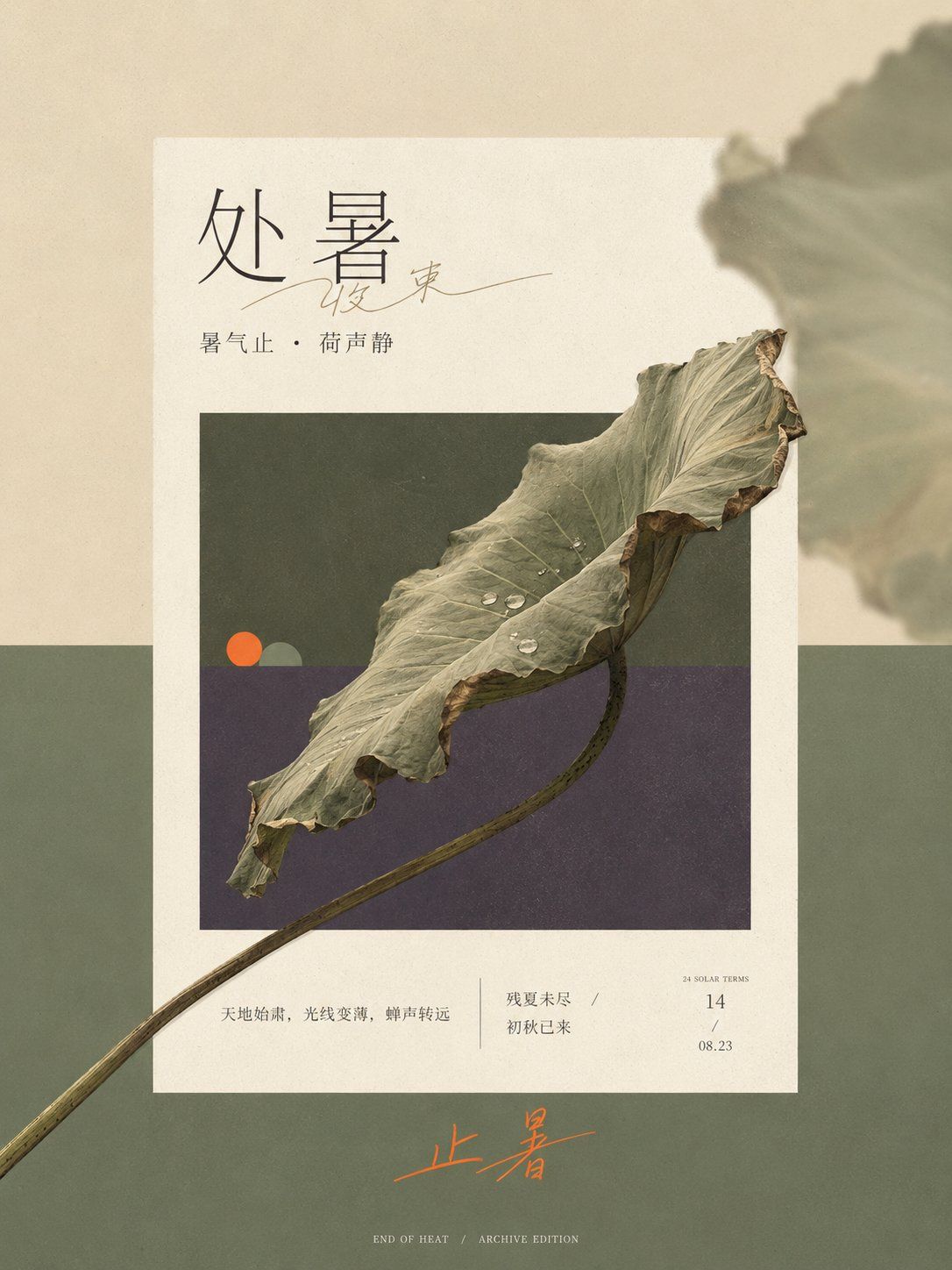
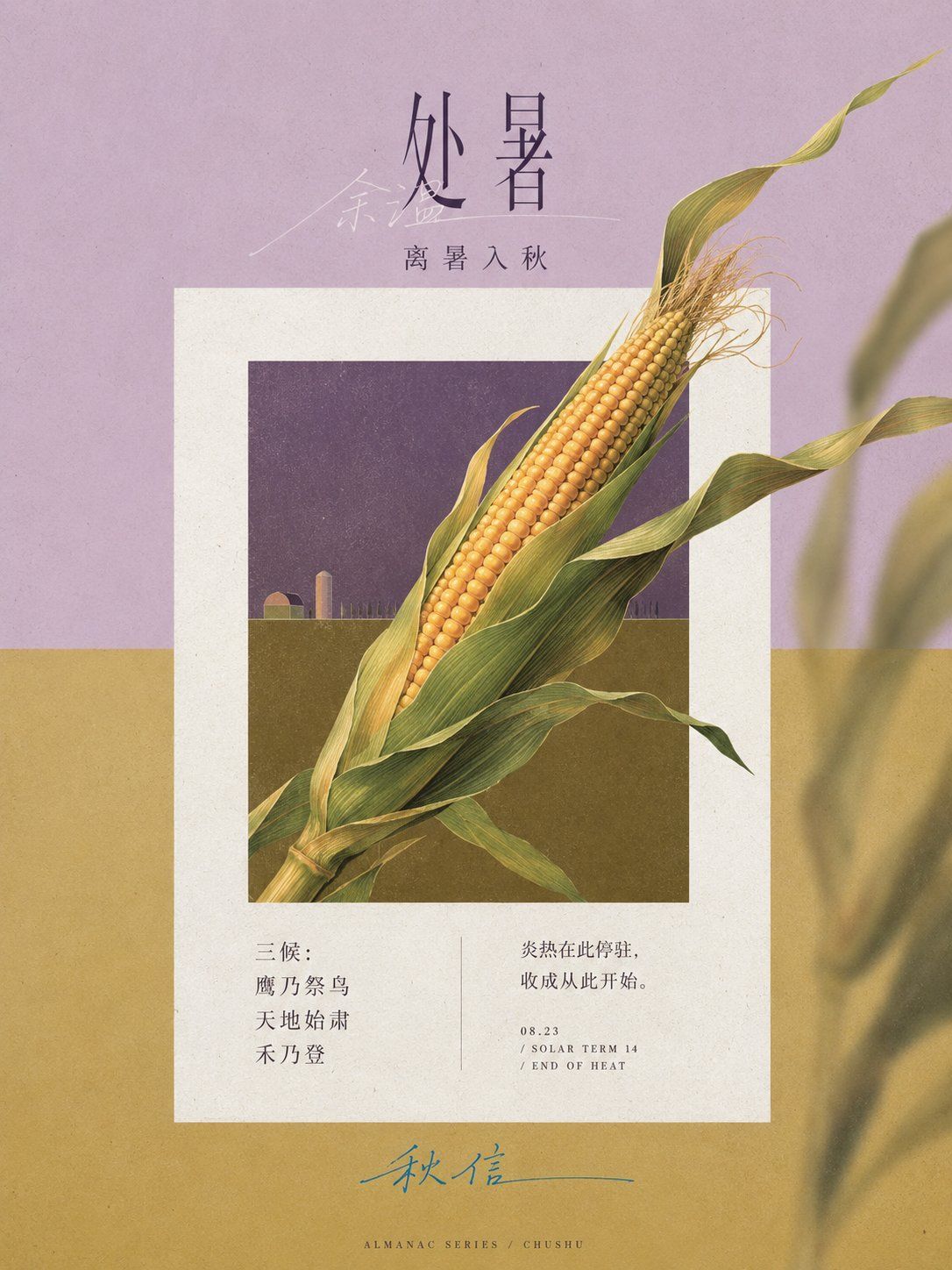
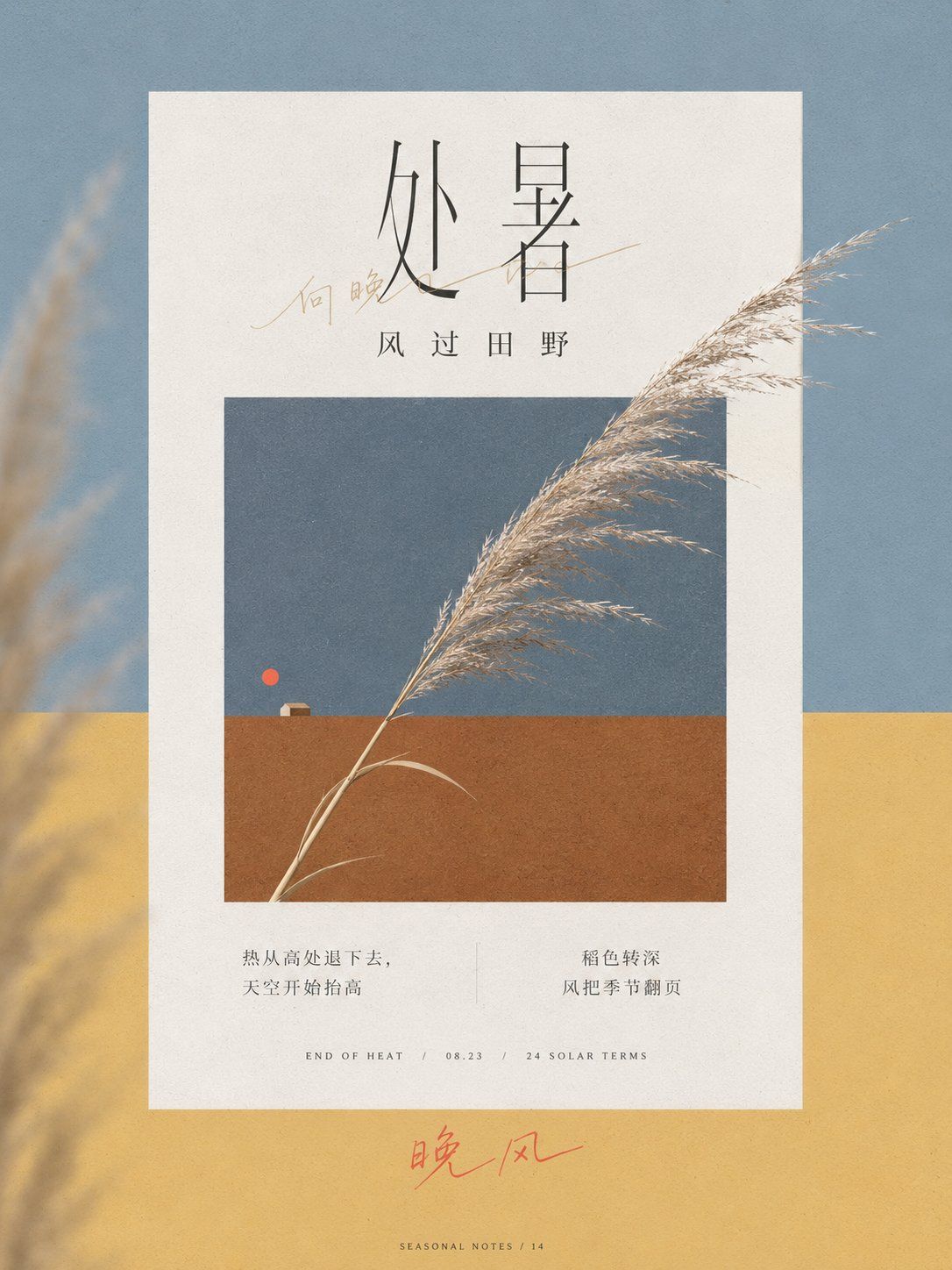
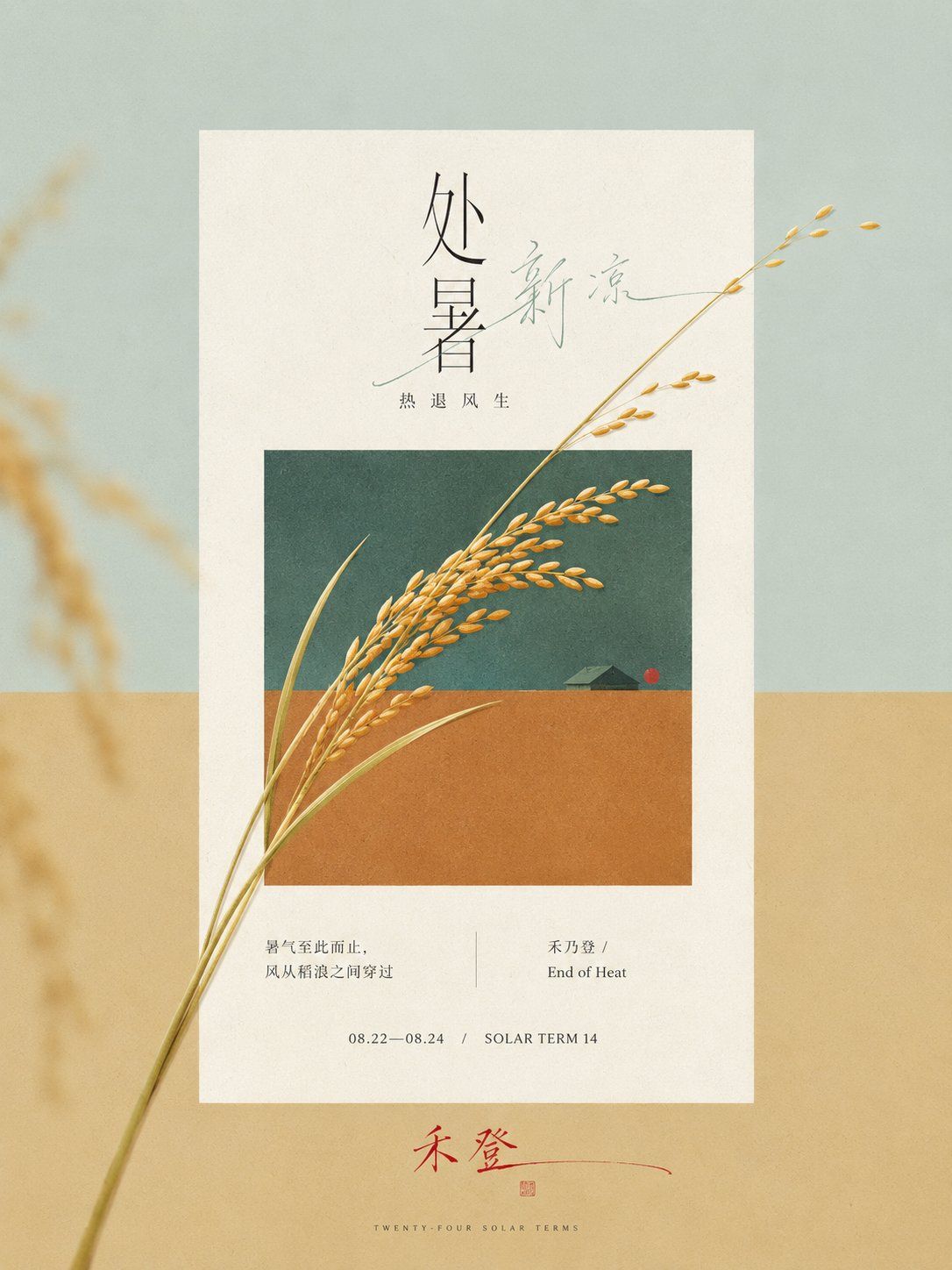
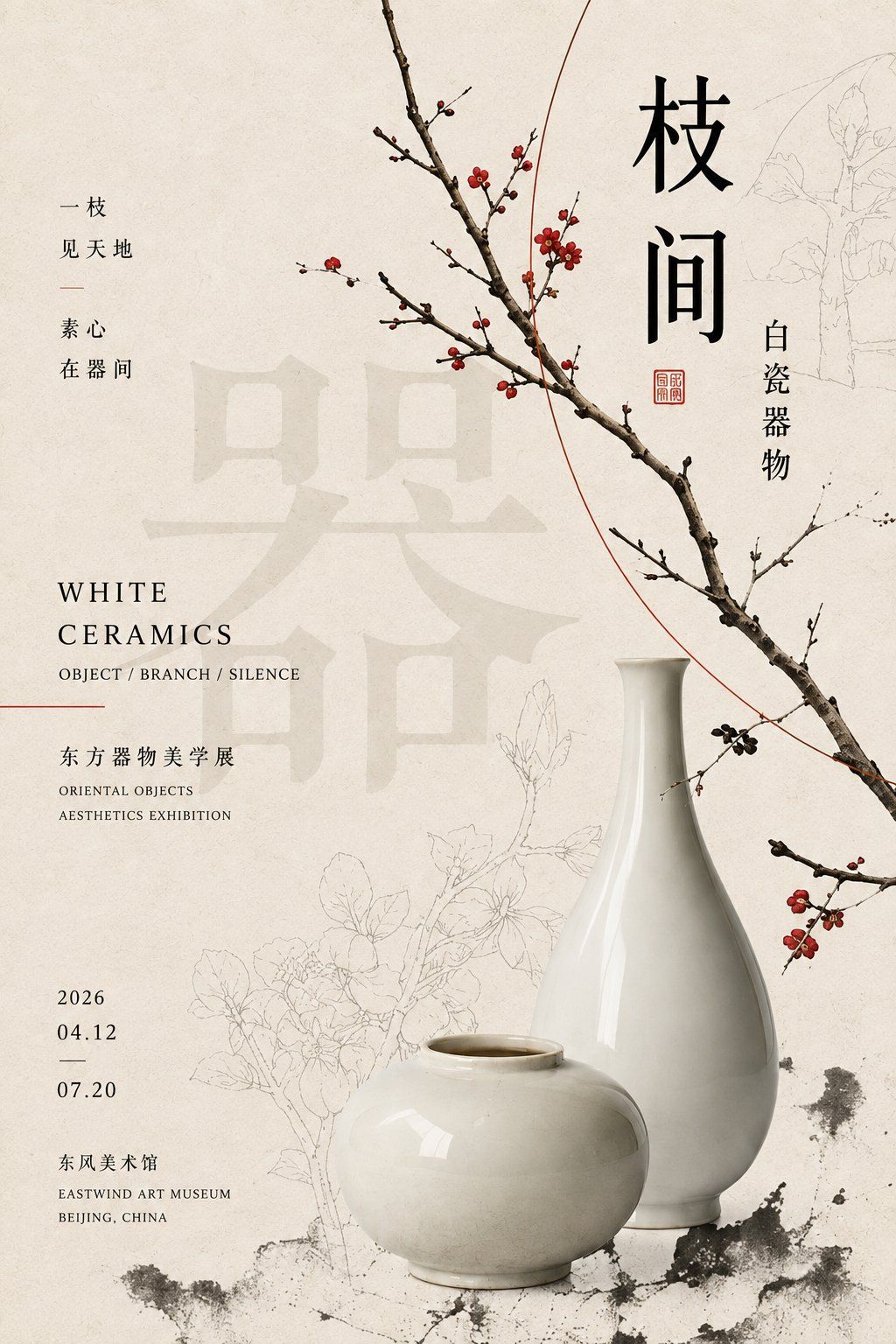
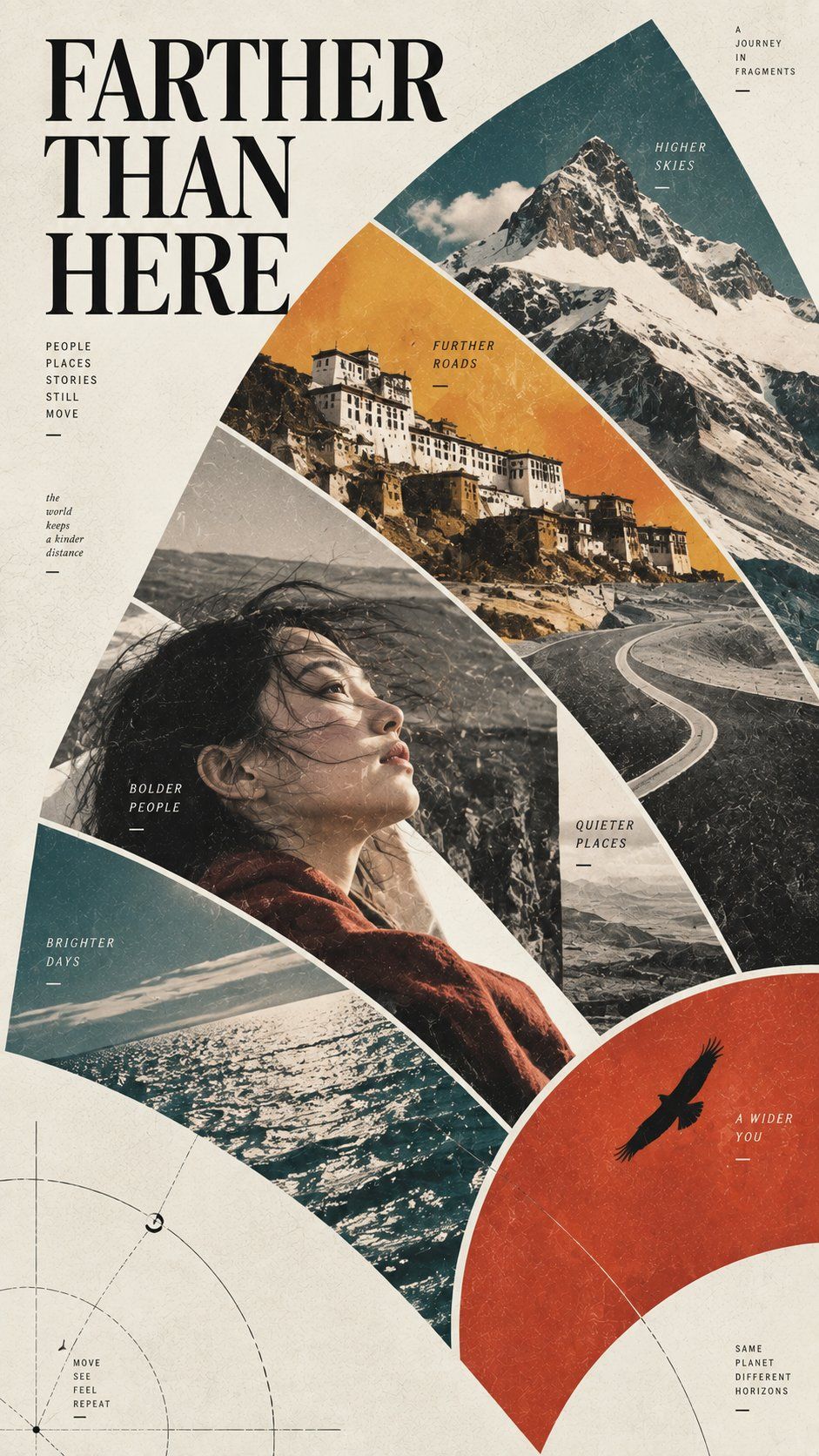
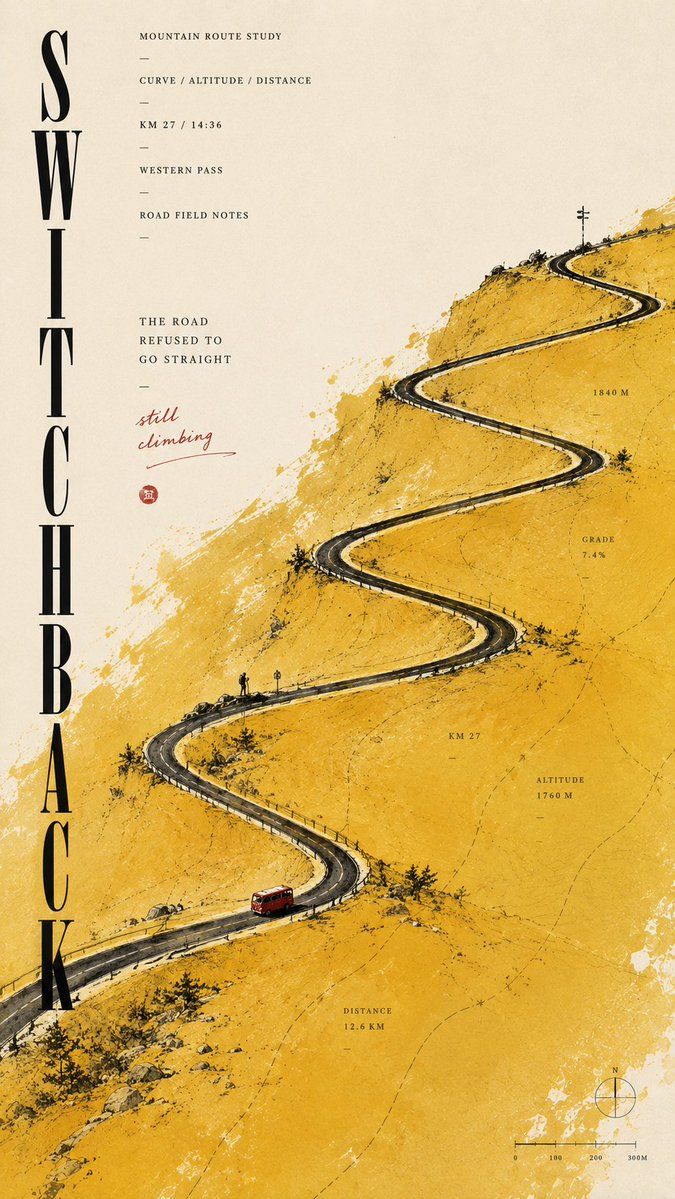
Create an extremely narrow, elongated vertical editorial visual around a specific theme. Construct three clearly separated flat spatial layers: a large outer color field, a central sheet of warm white paper, and a theme image window inset within the paper. First derive two structural colors from the theme's contrasting states and emotional temperature, then use a hard horizontal division to cover most of the composition. Repeat this division inside the inset image window at a smaller scale, in the same direction and at a similar ratio. Keep the outer field brighter and airier, the inner window deeper and denser, and use paper white as the brightest separating layer in the entire image. Concentrate the visual weight in the middle, retain a broad title area above, and leave a relaxed emotional landing area below. Keep the paper edges straight, avoid heavy floating shadows, and reserve a wide annotation band beneath the image window.

Extract one continuous, recognizable core form from the theme's direction, process, structural connections, and change over time. Organize it as a single diagonal axis running through the middle so that it crosses at least two boundaries from inside the image window, overlaps the window frame, enters the paper's negative space, and extends into the outer color field. Keep the boundary-crossing form intact and continuous. Preserve the clearest recognizable silhouette at the endpoints that cross the edges, while moderately compressing internal detail. Let local forms shift from dense to sparse along the diagonal axis. Reduce all other supporting objects to quiet, small geometric focal points that remain inside the image window near the color-field boundary. Keep the horizontal color boundary, vertical canvas, rectangular paper, and inset window in strict orthogonal order. Only the core subject may break the rules, using precise occlusion to create space rather than perspective or dramatic projected shadows.

Place a few related echoes along one edge of the subject's motion: enlarge and crop the core form, reduce its opacity and contrast, and blur it strongly until only soft color masses remain, with parts extending beyond the canvas. Keep the central subject sharp and the opposite side clean so the flat color field gains a shallow sense of atmosphere and memory. Maintain clear proportional order in the palette. The two structural colors should occupy about eighty percent of the image together; a thematic intermediary color should cross both fields and bridge differences in warmth or state; and one small accent color should appear exactly twice, far apart, at the focal point inside the window and in a typographic gesture outside the paper. Specific hues should adapt to the theme, but keep the luminance relationship stable: paper white is brightest, a few dark contours anchor the structure, and the accent wins through saturation rather than area.

Extend the image's order and boundary-crossing relationships into the typographic system. Set the main title in a tall, slender editorial serif structure with sharp details, pronounced stroke contrast, and refined terminals. For Chinese, use delicate letterforms with a literary, publication-like quality and generous spacing. Turn one keyword into a continuous, freehand fine line that lightly passes through or sits beside the printed title, creating a personal handwritten trace that echoes the subject's diagonal axis. Indent explanatory information into the lower portion of the paper and split it into two groups of medium-fine small text plus date-like microtype. Below the paper, a handwritten phrase with a long finishing stroke may carry the second use of the accent color. Keep only tiny metadata at the bottom edge. Progressively reduce density from title to image, annotation, and footer, and do not let text cover the core recognizable edges.

Render the objects with soft, directionless daylight and low shadows so the subject retains a limited sense of real material while still obeying the flat color fields. Cover the entire image with extremely subtle art-paper fibers, fine print halftone dots, and low-contrast scanning grain. Make the texture slightly more visible on the paper and inside the image window, while keeping the outer solid-color fields restrained. Allow slight print softening and color bleed along object edges, but keep key contours and letterforms clean. At first glance, the final image should present a white paper window within an elongated two-color field and a subject form that grows continuously from inside the window to outside it. Only afterward should the viewer notice the blurred edge echo, fine headline, handwritten intervention, and micro annotations, producing a modern printed-paper visual in which strict editorial order coexists with a vivid sense of time.

Theme: End of Heat, one of the Twenty-Four Solar Terms

Aspect ratio: 3:4
Create four images in total.
Each image should use different colors, illustration, composition logic, and copy logic.
围绕具体主题内容生成一张极窄长的竖版编辑视觉,让外部大色场、中央暖白纸页与纸页内缩的主题画窗构成三层清楚的平面空间。先从主题的状态对照与情绪温度中推导两种结构色,以一条硬水平分界覆盖画面绝大面积;在内嵌画窗中用相同方向和相近比例缩小复述这组分区,外场更明、更空,窗内更深、更密,纸白作为全画最高明度的隔层。画面重量集中在中段,上部保留宽阔标题区,下部留出舒展的情绪落点;纸页边缘平直,不使用厚重悬浮阴影,画窗下方保留宽阔注释带。

从主题的方向、过程、结构连接与时间变化中提取一条连续可识别的核心形态,把它组织成贯穿中段的单一斜轴,使其从画窗内部跨过至少两道边界,压住窗框、进入纸面留白并延伸到外部色场。跨界形态保持完整连续,越过边缘的端点保留最清楚的识别轮廓,内部细节适度压缩;局部形态沿斜轴由密到疏,其余辅助对象缩成安静的小型几何焦点,稳定留在画窗内部并靠近色场分界。让水平色界、竖向画幅、矩形纸页和内窗维持严格正交秩序,只有核心主题获得破格权,以准确遮挡关系建立空间,而不是依靠透视或戏剧投影。

在主题动势的一侧边缘布置少量同源回声:将核心形态放大、裁切、降低透明与对比,强烈失焦到只剩柔软色块,局部越出画布;中心主体保持清楚,另一侧保持干净,使平面色场获得浅层空气和记忆感。色彩保持清晰的面积秩序,两个结构色共同占据约八成画面,主题中介色跨越两场并缝合冷暖或状态差异,一个小面积强调色只在窗内视觉焦点与纸页外文字手势处远距离出现两次。具体色相随主题改变,但纸白最高、少量深轮廓压住结构、强调色以饱和度而非面积取胜的明度关系保持稳定。

文字系统延续图像的秩序与越界关系。主标题使用瘦长、细锐、笔画反差明显、端点精致的编辑衬线骨架,中文采用纤细而有书刊气质的字形,字距舒展;将一个关键词转化为连续自由的手写细线,轻轻穿过或邻接印刷标题,形成与主题斜轴呼应的私人笔迹。解释性信息缩进纸页下部,以两组中细小字和日期型微字分列;纸页外下方可用一组带长收笔的手写文字承接第二个强调色,最底边只保留极小元数据。让标题、图像、注释和页脚依次降低密度,不让文字压住核心识别边缘。

以无方向的柔和日光和低阴影处理对象,使主题保留有限的真实材质,却仍服从平面色块。全图覆盖极轻的艺术纸纤维、细印刷网点与低对比扫描颗粒,纸页和画窗中的纹理略明显,外部纯色场更克制;对象边缘允许微小印刷柔化与溢色,关键轮廓和字形仍保持清洁。最终画面第一眼呈现双色长幅中的白色纸窗与从窗内连续生长到窗外的主题形态,随后才显露失焦边影、精细题头、手写干预和微型注释,形成严格编辑秩序与鲜活时间感并存的现代纸印视觉。

主题:二十四节气之处暑

比例3:4
一共4个图片
每个图片不同的配色、插画、构图逻辑,文案逻辑