Master Prompt
Use the uploaded reference image only as the style, color, texture, lighting and mood reference. Create a completely new 16:9 Greek mythology hero illustration based on [GREEK MYTH / GOD / HERO / PLACE / STORY].

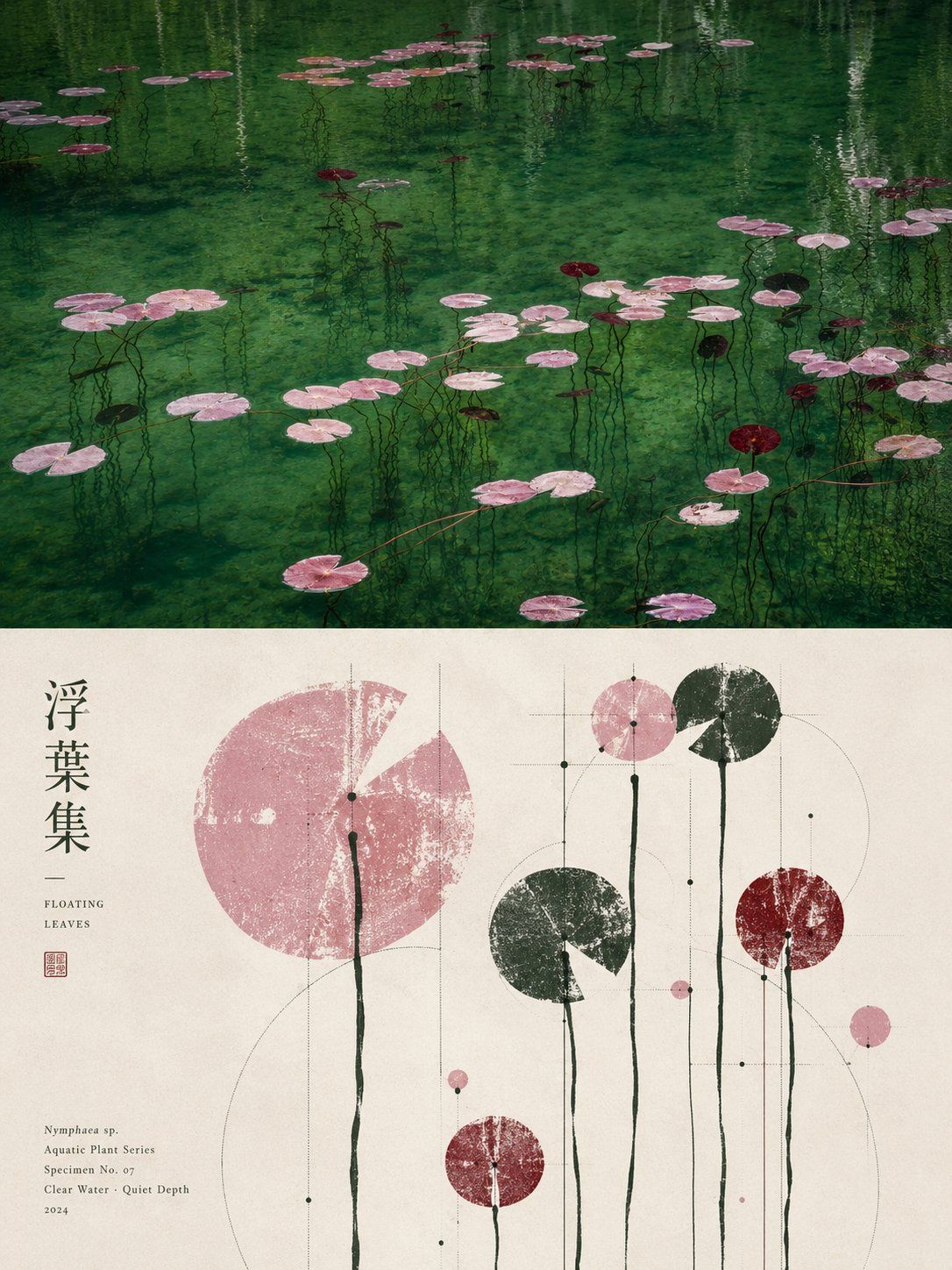
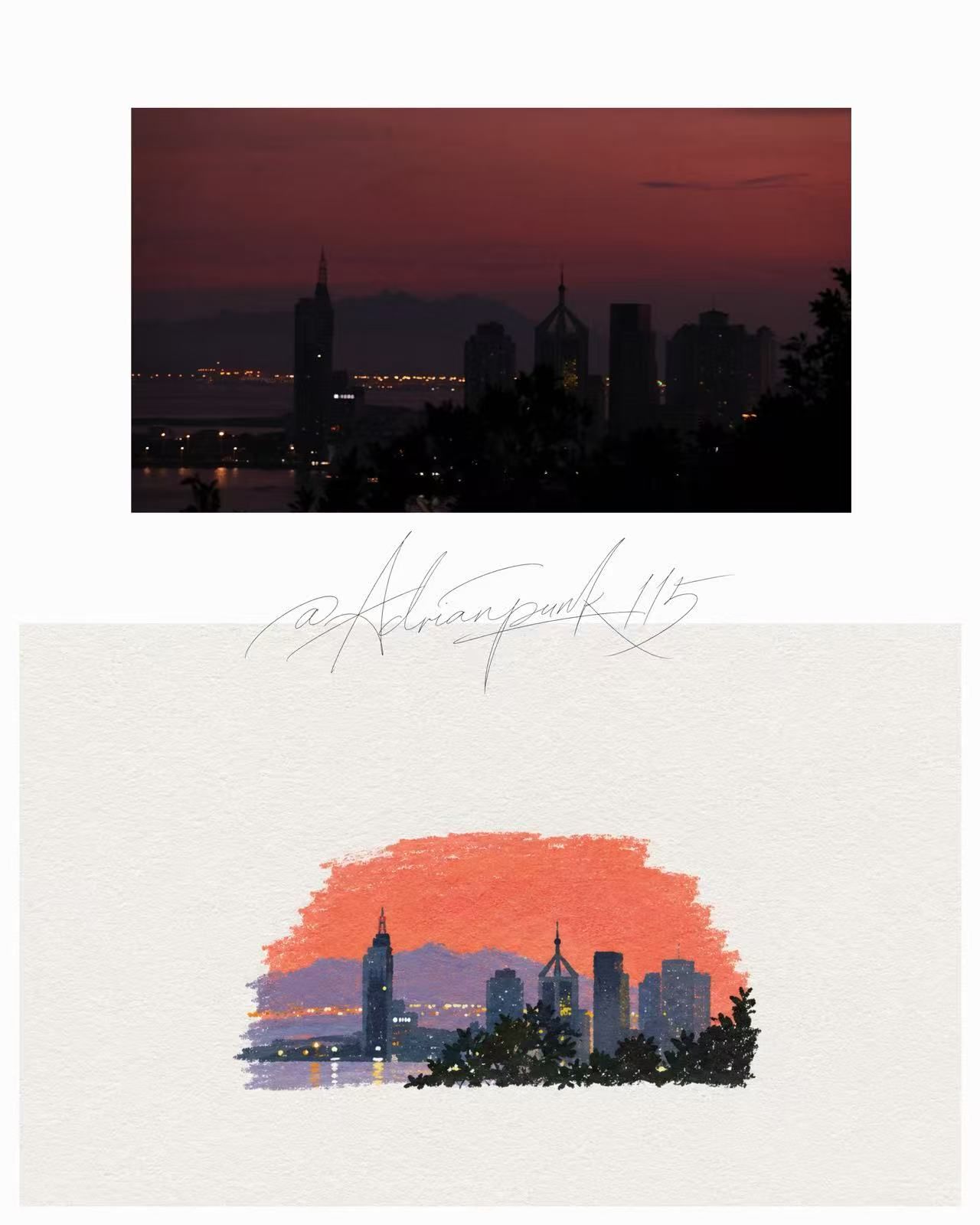
Preserve the reference's visual language: deep midnight-navy background, dusty cobalt-blue forms, one warm coral-orange / peach atmospheric accent, warm ivory highlights, dense powdery grain, soft airbrush speckling, risograph / screen-print texture, vintage mid-century editorial-poster feeling, softly imperfect edges, simplified sculptural forms, poetic symbolism and subtle celestial details.

Composition rules
- Keep the upper 45–50% mostly empty for website hero copy.
- The empty upper region should remain primarily deep dark navy, with only sparse tiny stars and very faint constellation lines.
- Begin the coral-orange / peach atmospheric horizon around the middle of the frame.
- Keep approximately 90% of architecture, people, statues, landscape and symbolic objects inside the bottom 50–55%.
- The main mythological subject should be small-to-medium in scale, integrated naturally into the landscape rather than towering through the sky.
- Create a strong sense of depth using foreground ruins or symbolic props, a middle-ground landscape and a distant temple / mountain / sea / ancient settlement.
- Leave generous negative space and avoid clutter.

Greek mythology direction
Build the lower scene around [SUBJECT] using 3–6 relevant Greek elements such as classical statues, Ionic or Doric columns, temples, marble steps, shields, spears, lyres, olive or laurel branches, amphorae, scrolls, cypress trees, mythological animals, stars, ancient ruins, Aegean islands or symbolic fruits and flowers. Every object should support the chosen myth instead of being decorative filler.

Style rules
Use large simplified shapes rather than hyper-detailed realism. Create depth through scale, overlap, atmospheric haze and tonal contrast. Gradients should feel grainy and printed, never digitally smooth. Use a tightly restrained palette rather than introducing extra colors. Lighting should feel dreamlike and symbolic, with warm coral light against cool navy shadows.

Avoid
No typography, logos or UI. No photorealism. No glossy CGI. No neon colors. No busy star fields. No giant character filling the frame. No central window, doorway, portal, chest opening, double exposure or scene-inside-a-silhouette composition. Do not allow large elements to invade the upper negative-space area.

The final result should feel like a premium poetic Greek mythology editorial illustration designed specifically as a modern website hero background.

Examples
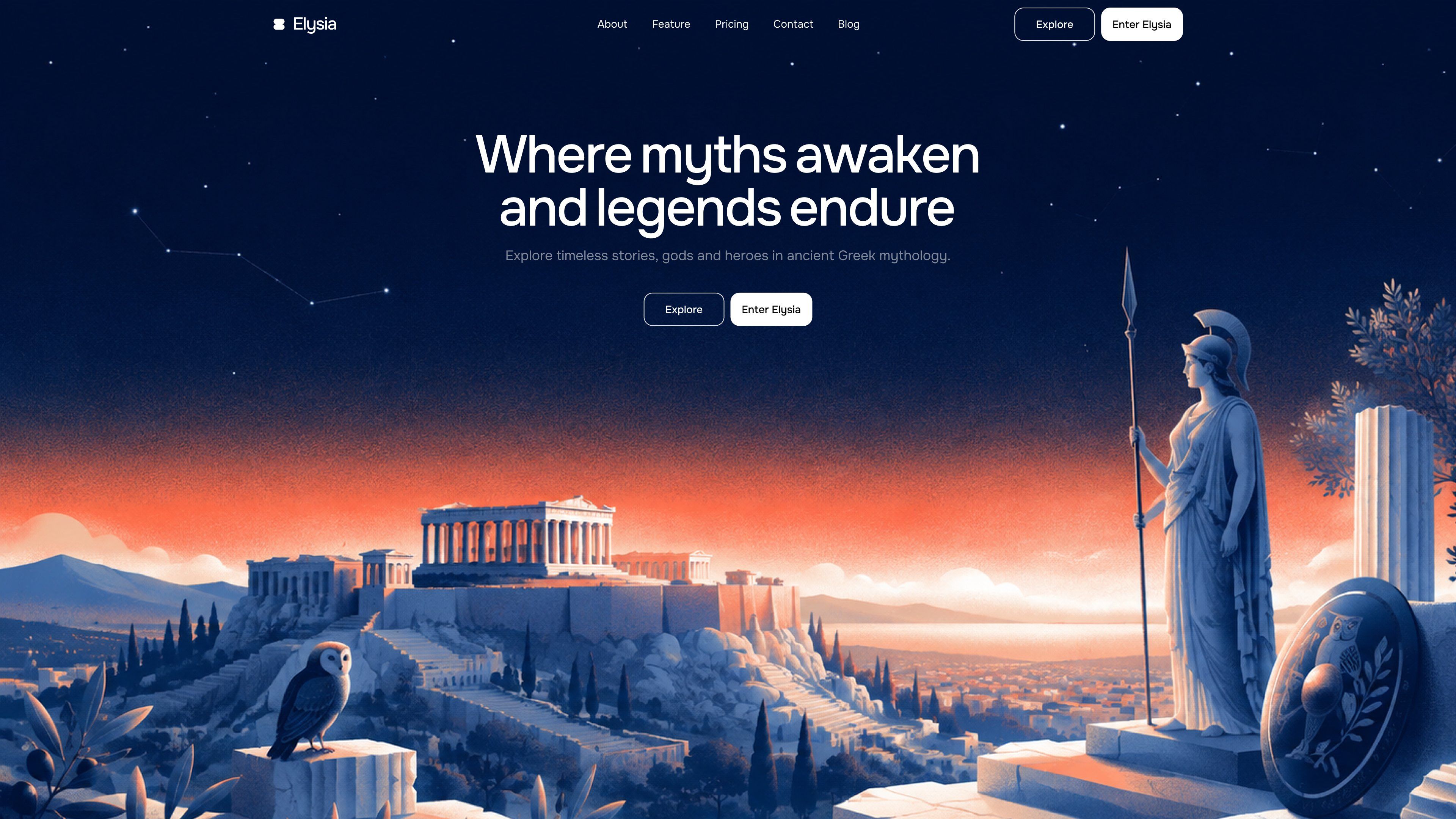
1. Athena — Guardian of Athens
Create a 16:9 cinematic Greek mythology hero illustration in a refined surreal editorial style. Keep the upper 50% mostly empty, dominated by a vast deep midnight-navy sky with sparse tiny stars and a few extremely faint constellation lines. Around the halfway point, transition gradually into a warm coral-orange and peach horizon glow with soft ivory clouds.

Concentrate all major visual elements in the bottom 50%. On the lower-left foreground, place a small Athena figure, elegant and restrained rather than monumental, wearing a crested Greek helmet and flowing blue robe, holding a tall spear beside a round shield embossed with an owl motif. Add a small owl nearby. Frame her subtly with broken Ionic columns, low stone ruins and a few olive branches.

Across the middle-right distance, show the Acropolis with a Parthenon-like temple rising above an ancient Athens-inspired city, layered hills, scattered cypress silhouettes and distant water. Athena should stay approximately the visual height of the nearby ruins and must not extend into the upper empty sky.

Use only a restrained palette of deep navy, dusty cobalt blue, muted stone blue, coral-orange, peach and warm ivory. Apply dense soft grain, airbrushed speckling, risograph / screen-print texture, softly imperfect edges, subtle atmospheric haze and vintage editorial-poster softness. Avoid photorealism and glossy 3D rendering. No text, no UI, no central portal, no window, no body cutout.

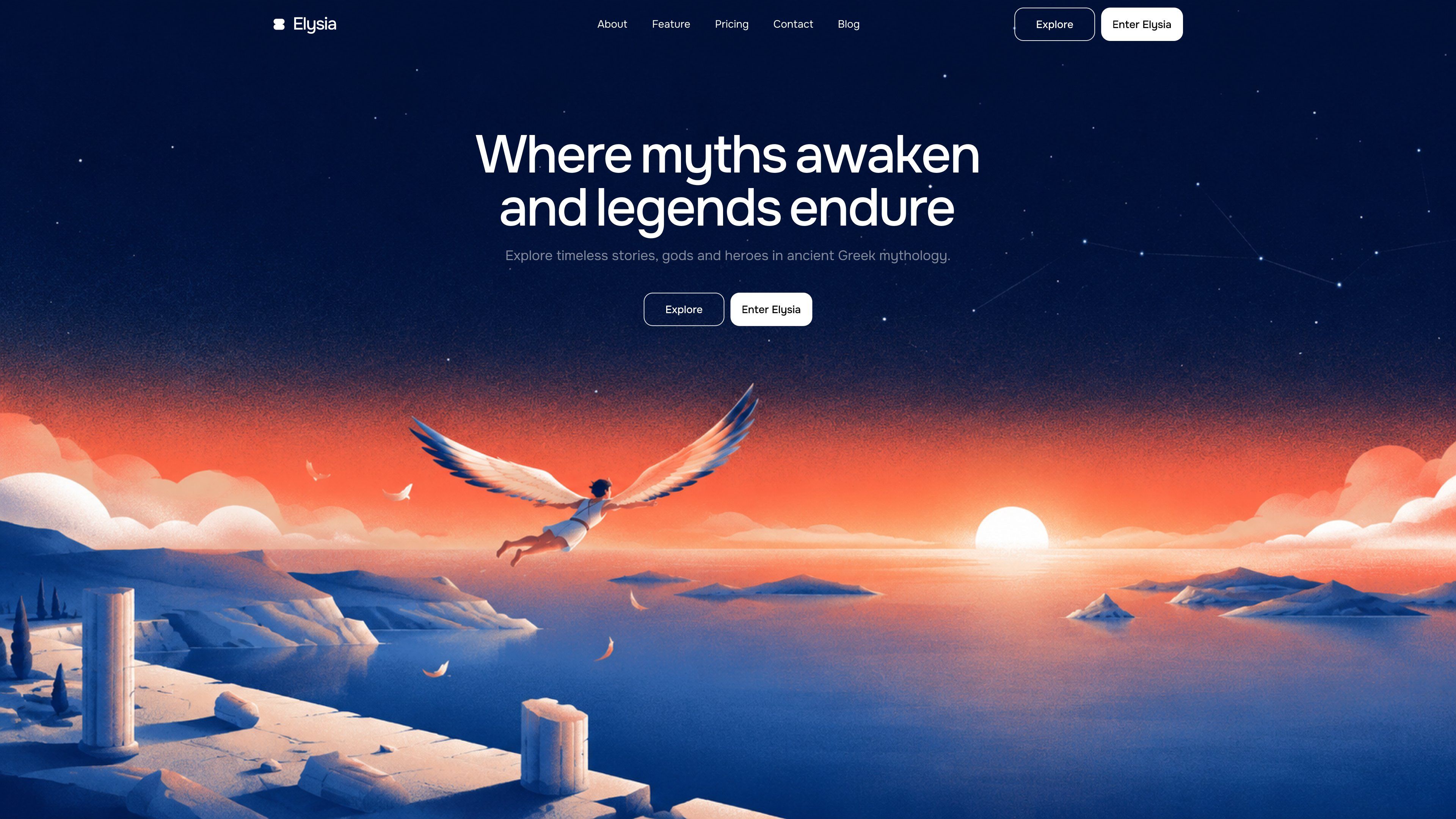
2. Icarus — Wings Over the Aegean
Create a 16:9 surreal Greek mythology hero illustration in the same midnight-blue and coral editorial visual language. Keep the upper 45–50% mostly empty as an expansive deep navy sky with sparse stars and very subtle constellation markings. Near the middle of the image, let the navy fade into a glowing coral-orange sunrise or sunset with peach clouds and a pale ivory sun low on the horizon.

Use the bottom half for the landscape: a vast Aegean Sea viewed from high rocky Greek cliffs, with simplified blue islands scattered into the distance, pale stone ledges and a few broken classical column fragments in the foreground.

Place Icarus as a relatively small figure flying horizontally across the lower-middle sky, wings fully extended and catching warm ivory and coral light along their feathers. Add only a handful of loose feathers trailing behind him to create motion and scale. Keep the scene open, spacious and poetic, emphasizing the enormous sea and sky rather than the character.

Maintain the limited palette of midnight navy, dusty cobalt, coral-orange, soft peach and warm ivory, with grainy screen-print texture, powdery airbrush gradients, soft illustrated edges and a dreamy vintage editorial finish. No photorealism, no giant figure, no portal, no body silhouette containing another scene, no text or UI.

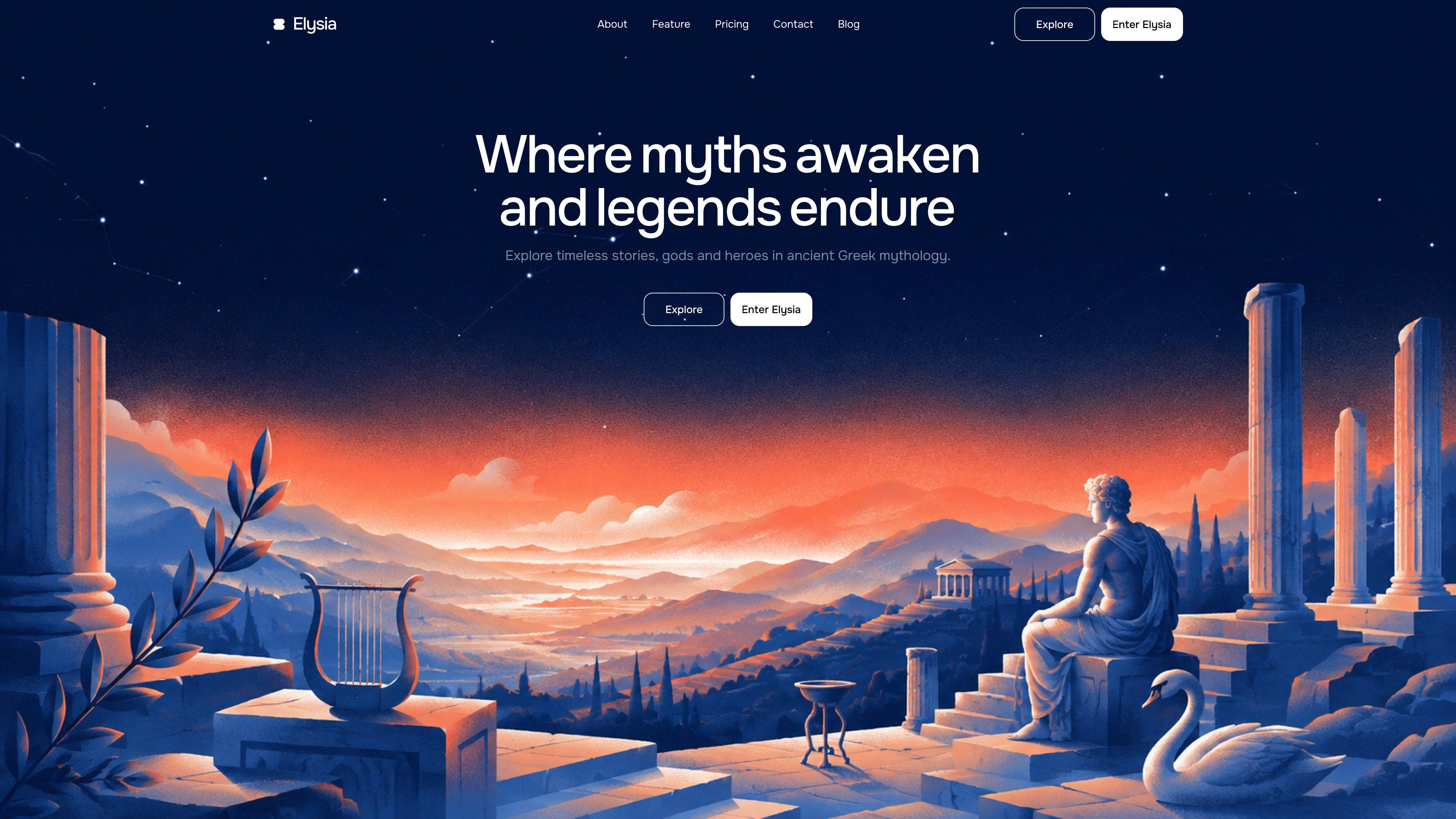
3. Apollo — The Oracle at Delphi
Create a 16:9 cinematic editorial illustration inspired by Apollo and ancient Delphi. Keep the upper 45–50% predominantly empty, filled with a rich midnight-blue celestial sky, tiny scattered stars and a few delicate low-contrast constellation lines. Let the lower edge of the sky transition into a glowing coral-orange and peach dawn over distant layered mountains.

Build the mythic landscape entirely across the lower 50–55%. Show elevated ancient Delphi terraces overlooking a huge valley, with broken marble columns at the far edges, stone steps, cypress silhouettes and a small distant temple nestled into the mountainside.

On the lower-left foreground, place a lyre on a simple stone pedestal beside a laurel branch. On the lower-right, include a small seated Apollo-like figure or classical statue, calm and contemplative, facing the landscape. Add a graceful white swan nearby as a secondary symbolic detail. Keep all people, statues and architecture well below the midpoint so the upper region remains usable for hero text.

Render everything using deep navy, muted cobalt blue, coral-orange, peach and ivory, with thick powdery grain, screen-printed gradients, subtle ink texture, softly worn edges and mid-century editorial-poster simplicity. No realistic photography, no central window, no inner-body composition, no text and no interface elements.

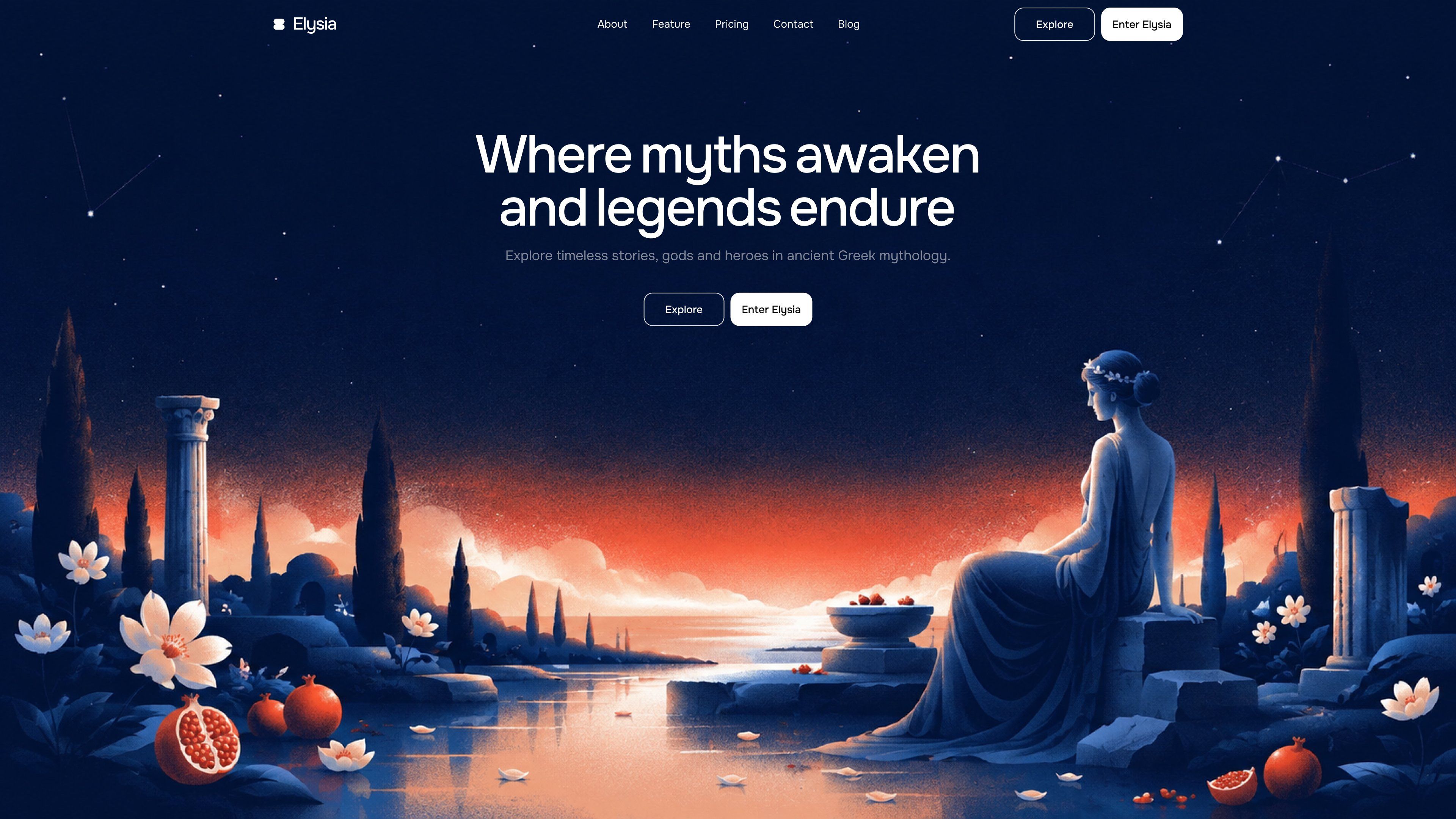
4. Persephone — Garden Between Worlds
Create a 16:9 surreal Greek mythology landscape inspired by Persephone, using the same grainy midnight-blue / coral-orange editorial world. Reserve approximately the upper 50% as mostly empty dark navy sky, with only sparse stars and extremely subtle constellation lines. Near the center line, fade into a warm coral-orange horizon with soft peach and ivory atmospheric clouds.

Keep the entire mythological environment in the bottom half. Create a quiet ancient garden beside still reflective water, surrounded by low dark-blue ruins, partial Greek columns, distant arches and slender cypress trees. Scatter pale stylized flowers and a few petals through the foreground.

Place a small Persephone-like woman seated on stone ruins toward the lower-right, wearing flowing dark-blue classical drapery and looking toward the glowing horizon. Use pomegranates as the main symbolic accent: several whole fruits and one opened pomegranate in the lower foreground, plus a simple offering bowl near the figure. Keep the composition calm, mysterious and elegant rather than dark or frightening.

Use the same limited colors — midnight navy, dusty cobalt, coral-orange, soft peach and warm ivory — with dense grain, speckled airbrush transitions, risograph / screen-print character, matte illustrated surfaces and dreamy vintage-poster softness. No central doorway or portal, no scene inside a body silhouette, no photorealism, no typography or UI.